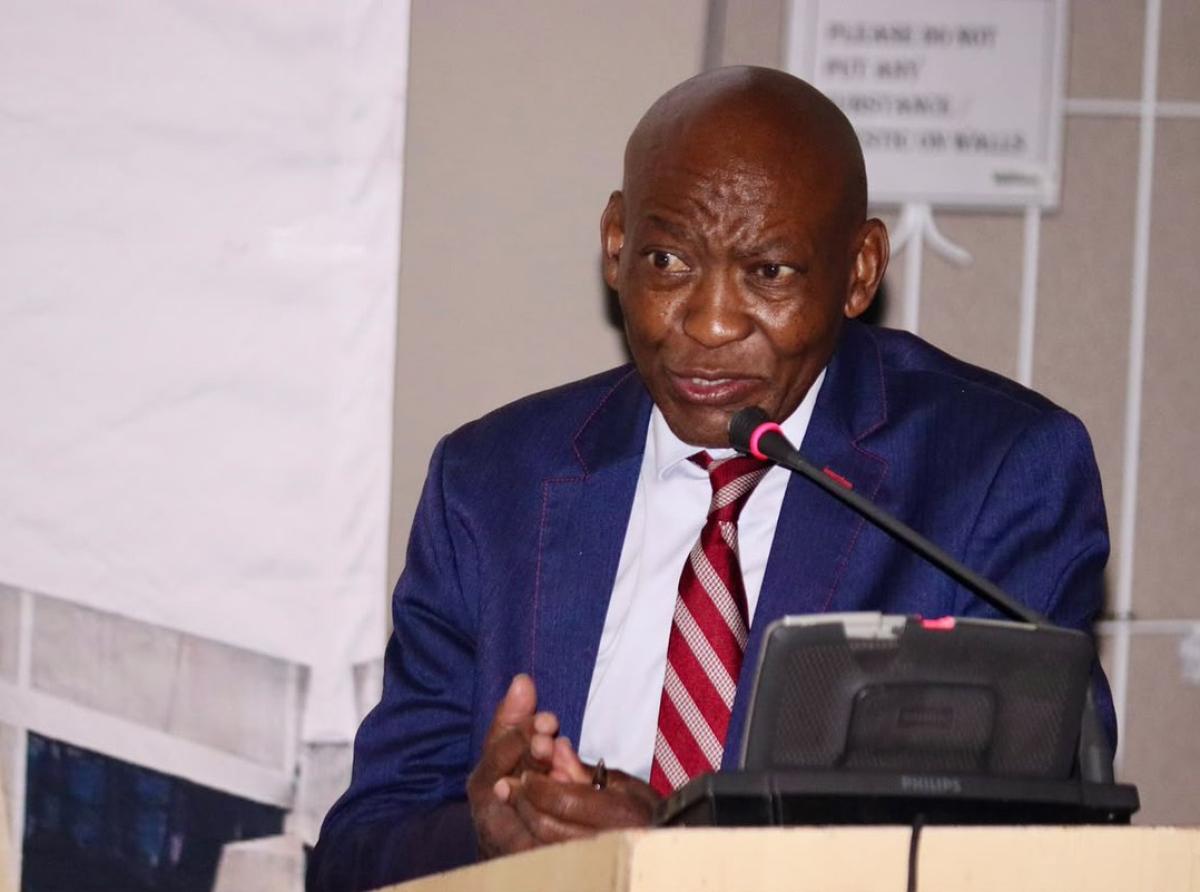
Persistent implementation failures, financial mismanagement and weak accountability have come under fire after the National Council of Provinces (NCOP) raised serious concerns over the state of municipalities in the Northern Cape.
During its annual Provincial Week oversight visit, the NCOP delegation, led by Provincial Whip Patrick Mabilo, assessed service delivery and progress on previous recommendations at Sol Plaatje, Siyancuma and Siyathemba local municipalities.
While the delegation acknowledged progress on some infrastructure projects, it warned that recurring failures continue to undermine service delivery and public confidence.
Mabilo said the province’s biggest challenge was not a shortage of plans, but the failure to implement them effectively.
“We have seen that the Northern Cape’s principal challenge is not the absence of plans or commitments, but weak implementation and follow-through,” Mabilo said.
The delegation identified municipal capacity, financial management and accountability as major weaknesses, alongside contractor failures, project delays, excessive reliance on consultants and poor financial controls.
According to the delegation, the Auditor-General raised concerns over municipalities’ dependence on consultants, while R656 million in irregular expenditure was identified across municipalities. Nine municipalities remain distressed, with 30 of 144 senior management posts vacant.
The province is also losing billions of rands through water inefficiencies. Non-revenue water is estimated at 45%, translating into an estimated annual revenue loss of R2.93 billion. None of the water systems assessed achieved Blue Drop certification in the 2023 assessment.
Housing projects stuck
At Siyancuma, the NCOP found major delays in a 150-unit low-cost housing programme serving Griekwastad, Schmidtsdrif, Campbell and Bongani.
The project, initially expected to take eight months, has dragged on for about two years, with only 20 houses completed.
Siyancuma has received qualified audit opinions for four consecutive years and accumulated R66 million in unauthorised expenditure and approximately R21.256 million in irregular expenditure.
The municipality also owes about R321 million to Eskom and water boards, while revenue collection stands at only around 49%, putting further pressure on its finances.
Residents raised additional concerns over severe water shortages and the poor condition of the gravel road between Schmidtsdrif and Douglas, which is used by learners.
The Schmidtsdrif Communal Property Association also reported inadequate post-restitution support, limited financial and institutional capacity and poor cooperation between government departments.
Siyathemba presents a similarly troubling picture, having received qualified audits for five consecutive years.
The municipality has an unfunded budget overspend of R611 million dating back to 2011, while Eskom debt has reached about R350 million.
The stalled Prieska housing development remains a major concern. Phase 2, comprising 200 units, has 61 incomplete houses after the contractor defaulted in 2023.
The abandoned site has reportedly become vulnerable to vandalism and criminal activity, while 18 houses from an earlier development have developed severe cracks and require urgent repairs.
Sol Plaatje shows progress — but concerns remain
The delegation acknowledged progress on the R2.7 billion Sol Plaatje Bulk Water Infrastructure Project, a seven-year programme aimed at strengthening water security.
The emergency phase is reportedly 98% complete, with nightly water shutdowns eliminated and unplanned interruptions substantially reduced.
However, the NCOP raised concerns over R97 million in unspent funds, continuing water losses and shortcomings in water-quality testing and reporting.
Delays were also flagged at the Hull Street Social Housing Project, where only 106 of the planned 372 units are nearing completion.
The original contractor was terminated in March 2024, while the replacement contractor suspended work in November 2025 over an outstanding payment of R42.3 million. The matter is currently before the Northern Cape High Court.
The NCOP called for interim or emergency funding and site security to protect the near-complete units while funding and legal disputes are resolved.
Mining wealth, but little local benefit
The delegation also questioned the beneficiation of tiger’s eye mined in the Siyathemba area.
The mineral is reportedly processed in Kimberley instead of within the municipality where it is extracted, raising concerns that local communities are not benefiting sufficiently from the province’s mineral wealth.
The NCOP said the situation undermines the principles of inclusive economic development and local beneficiation.
NCOP demands action
The delegation has called on municipalities to fill critical vacancies, particularly chief financial officer posts, while reducing consultant expenditure by 30% in line with Auditor-General recommendations.
It also wants municipalities to strengthen internal financial functions and improve water-quality monitoring and public reporting.
The stalled Prieska housing project has been prioritised, with a detailed action plan expected to be submitted to the NCOP within two months. The delegation will also engage National Treasury on solutions for stalled housing developments.
Departments responsible for infrastructure projects have been given three months to submit detailed progress reports outlining funding, timelines, challenges and remedial measures.
Mabilo said the success of the NCOP’s oversight would ultimately be measured by whether its recommendations translate into action within agreed timeframes.
The delegation said it would continue monitoring commitments after the local government elections.
“Communities must see tangible change, not just repeated observations,” the delegation said.