Free State Targets Surgical Backlogs
The three-day Cataract Marathon, held over the weekend at Boitumelo Regional Hospital in Kroonstad, was a great success, with over 100 patients receiving treatment.
Screening was conducted last week Friday with cataract operations scheduled for Saturday and Su...
DJ Maphorisa (Themba Sonnyboy Sekowe), affectionately known as Phori, is proving that his return to Afrohouse is more than just a creative pivot - it’s a strategic move already yielding results.
The amapiano music maestro has secured a coveted slot in Ibiza, joining the line-up of international DJ acts set to perform at Black Coffee Saturdays.
The announcement was made by Black Coffee (real name Nkosinathi Maphumulo) alongside the official Hï Ibiza Instagram page.
Following the announcement, Phori took to his Instagram to express gratitude for the opportunity to showcase his talent on a global stage.
“Honoured @realblackcoffee @hiibizaofficial ❤️🙏🏿,” said Phori in his post.
Fans and followers were quick to flood his comments section with messages of support and encouragement. This is what they had to say:
@shuduchristina said: “We are within.”
@abdeepcrazy said: “There’s a lot of South African DJs appearing. I’m proud @realblackcoffee.”
@the_truth_is_the_gospel__ said: “Bra Coffee mindfully handpicked the best of the best in the game as his guest DJs. He knows what he’s doing and made no mistake.”
While @sowetounderground said: “Ibiza is about to be lit.”
“Black Coffee Saturdays” most commonly refers to the renowned Grammy-winning DJ and producer’s eighth annual summer residency at Hï Ibiza, running from May 2 to October 3.
It remains one of the premier weekly house music events globally, with Black Coffee delivering his signature Afropolitan sound in the main Theatre.
Phori is not the only South African name on the line-up.
He joins a strong local contingent including Shimza, Kabza De Small, DJ Kabila, DJ Merlon, DJ Kent, FKA Mash, Kasango, Shoba and SONA - a clear indication of South Africa’s continued global dominance in dance music.
Earlier this year, Maphorisa announced that he would be shifting his focus from amapiano back to Afrohouse.
“Amapiano is in good hands; I am going back to my roots where it all started: AFRO!” he wrote.
With the support of Shimza, Maphorisa recently performed his first Afrohouse set at Kunye in Kenya - a platform founded by Shimza to spotlight African electronic music talent.
He thanked Shimza for providing him with the opportunity to reintroduce himself in the Afrohouse space, signalling what could be a defining new chapter in his already influential career.
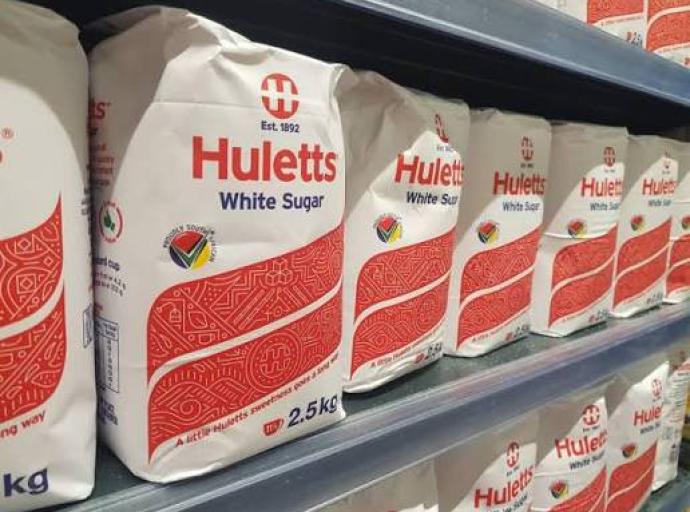
The International Development Corporation (ICD) has pumped another R200 million into beleaguered Tongaat Hulett in a bid to keep it afloat.
This investment takes its contribution in the company, which has been in business rescue since October 2022, to R2.5 billion.
In a note to shareholders, Tongaat Hulett says the funding agreement has also been extended to the end of June. This, it says, gives it “more time to access the money and repay it”.
The IDC’s cash injection held off a liquidation hearing set to be heard yesterday. The liquidation hearing has been postponed and is “now scheduled to be heard on 17 and 18 June 2026 [Saturday],” it said.
Can’t rescue
The business rescue practitioners previously said there was no longer a reasonable prospect of rescuing the company and filed for provisional liquidation. “As a result, the business rescue plan is no longer capable of implementation,” the company said at the time.
This followed a sale agreement underpinning its rescue plan had lapsed after suitor Vision declined to grant an extension, leaving the plan no longer capable of implementation.
The rescue plan, approved by creditors in January 2024, had relied on Vision acquiring key assets and stabilising the business through a combination of restructuring and asset sales.
Its implementation was subject to several conditions, including the refinancing of a R2.3 billion facility from the IDC, the funding of a R517 million escrow account linked to the South African Sugar Association, and R75 million for distribution to concurrent creditors.
Payment commitments
Tongaat Hulett will need to repay the full amount to the IDC before any sale of the business, unless the funder agrees to convert the debt into a longer-term loan.
The company said the additional funding will help it continue operating during the current off-crop period and prepare for the next milling season.
Tongaat Hulett went into business rescue after the board found the companies were in “financial distress” due to a working capital shortfall of about R1.5 billion.
The crisis followed years of high debt, alleged accounting irregularities, and poor management, worsened by the COVID-19 pandemic and the KwaZulu-Natal unrest in 2021. A group of banks had also refused to extend more credit.
The implementation of the business rescue plan has faced several challenges, including missed funding deadlines. The company used to operate four sugar mills in South Africa, on the KwaZulu-Natal north coast and in Zululand.
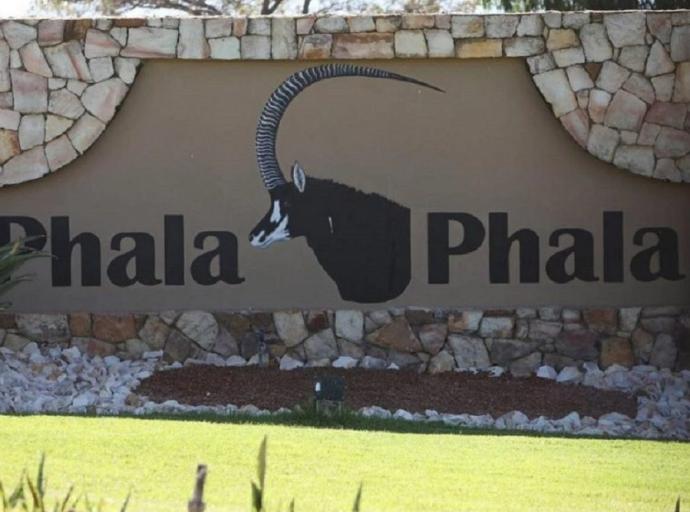
The Independent Police Investigative Directorate (IPID) insists that it has recommended disciplinary action against two SAPS officers, including a senior member of President Cyril Ramaphosa’s protection detail, over their alleged role in failing to report the 2020 Phala Phala farm burglary.
The report, declassified last week, relates to a February 2020 break-in at Ramaphosa’s Limpopo farm, during which about $580,000 (roughly R8 million at the time) was allegedly stolen from inside a sofa.
Those implicated are Major General Wally Rhoode, head of the Presidential Protection Service, and Constable HH Rekhotho, who is attached to the Presidential Protection Services Unit at head office in Pretoria.
According to IPID, both officers failed to report a prescribed offence to their commanding officer as soon as they became aware of it, in contravention of the SAPS Act.
The findings follow the release of IPID’s report into the conduct of members of the Presidential Protection Service Unit after a Promotion of Access to Information Act (PAIA) application by ActionSA and the African Transformation Movement (ATM).
Suspended police minister Senzo Mchunu had previously indicated that the report would remain classified.
IPID spokesperson Lizzy Suping said the investigation was limited to police conduct under section 28 of the IPID Act 1 of 2011.
“The Phala Phala Farm investigation was also conducted by other agencies, including the Directorate for Priority Crimes Investigation (DPCI), whose focus was on the criminal aspect of the incident that occurred at the farm.”
“In terms of the IPID findings, Major General WP Rhoode and Constable HH Rekhotso contravened the SAPS Act 68 of 1995 as they failed to inform their commanding officer of a prescribed offence as soon as they became aware of it,” she said.
Suping said the investigation also found that the officers conducted an inquiry without registering a case on the SAPS case management system with a reference to a specific police station, and failed to document the breach of security at the farm in the SAPS 2020 and 2021 annual report, among other findings.
“Although the investigation was concluded in 2023, the report remained classified until February 2, 2026 because IPID did not want to prejudice the DPCI investigation that was ongoing at the time due to common elements between the various investigations.”
“As prescribed in Section 30 of the IPID Act, SAPS was also requested to provide a report on the disciplinary process to the Minister of Police and the Executive Director of IPID.”
Suping said SAPS had conducted its own internal process, which reached a different outcome from IPID’s findings.
“While IPID acknowledges the internal disciplinary mechanisms available to SAPS, it (IPID) remains guided by its legislative mandate in terms of the IPID Act and stands by its findings and recommendations, as they were based on the evidence gathered.”
“In its role as an oversight body on police misconduct, IPID continues to conduct impartial investigations premised on thoroughness and quality and not mere compliance with the IPID Act.”
“IPID will continue to engage constructively with SAPS to promote accountability, consistency, and public confidence in the handling of such matters,” she added.
Meanwhile, ActionSA has written to the Public Protector requesting that the Phala Phala investigation be reopened, arguing that officials in the Presidency may have misused state resources to cover up the robbery.
ActionSA national chairperson Michael Beaumont said the party had written to Public Protector Advocate Kholeka Gcaleka urging her to reopen the investigation.
“The original Public Protector report into the Phala Phala farm robbery placed emphasis on investigating the conduct of the President and members of the Presidential Protection Unit.”
“What is now evidenced by the recently unsealed IPID report is that the scope of the investigation must be significantly broadened to examine the role of all officials with proximity to the President.”
The African Transformation Movement (ATM) has also written to Parliament seeking the initiation of impeachment proceedings against Ramaphosa. Parliament confirmed receipt of the correspondence.
“The correspondence from the African Transformation Movement is received,” Parliament spokesperson Moloto Mothapo previously told IOL News.
“The Speaker is currently applying her mind to its contents and will be guided by the Constitution, the rules of the National Assembly, and established parliamentary processes in arriving at any decision.”
ATM spokesperson Zama Ntshona welcomed Parliament’s acknowledgement and urged impartiality from the Speaker.
“Our expectation is that the Speaker applies her mind to the matter in a non-partisan and impartial manner, allowing space for this issue to be ventilated. It has gone on for far too long,” Ntshona told IOL News.
“We cannot have a President who has a cloud hanging over his head.”
“The 2024 elections changed the narrative significantly. The ANC can no longer rely on its majority to shield important matters,” he said.
He added that parties within the Government of National Unity (GNU) would face a critical choice between protecting individuals and upholding democratic principles.
“The point is simple: why should the $580,000 found in couches be treated differently?” he said.
“What we seek is the entrenchment of the rule of law and the principle that all citizens are equal before it.”
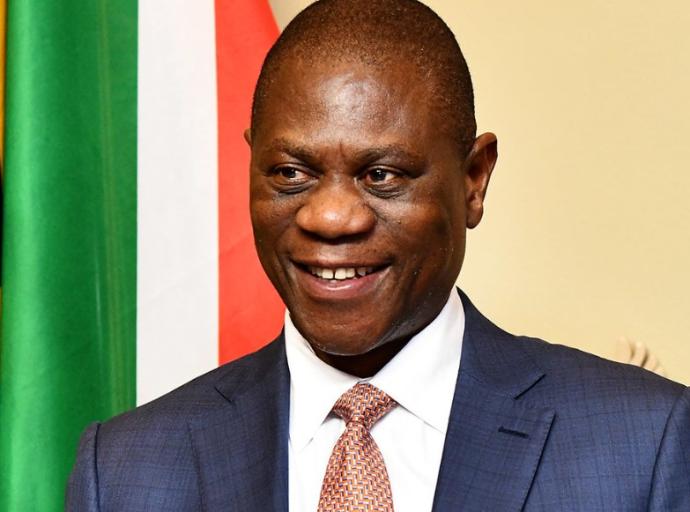
Deputy President Paul Mashatile has emphasised the importance of ensuring that the country’s human resource development system remains responsive to rapid technological change, including artificial intelligence, digitalisation and automation.
Delivering an opening address at the 5th Human Resource Development Council (HRDC) Summit at the Gallagher Convention Centre in Midrand, Mashatile stressed the need for preparing young people and workers for the jobs of the future.
Mashatile emphasised that the push for skills development, employability, and state capability requires deep social compacts grounded in trust, accountability, and shared ownership. He pointed out that the HRDC Summit coincides with the launch of the Reconceptualised Human Resource Development Strategy for the period 2025 to 2035, as well the Master Skills Plan.
“Guided by the National Development Plan, the reconceptualised strategy identifies four goals and 12 interventions across the HRDC’s three thematic areas. In schooling, these include early childhood development, reading for meaning, and curriculum differentiation, each requiring deep collaboration. In youth development, the emphasis falls on relevant short courses and expanded workplace experience, particularly within growth sectors such as the green and digital economies and scaling technology, drive skills programmes.”
Mashatile says as artificial intelligence and automation transform industries, emphasis should be made on developing human-centred and social skills.
“Today, success in a dynamic and uncertain world increasingly depends on human and social capabilities such as analytical thinking, communication, creativity, collaboration, resilience, and adaptability,” says Mashatile.
Minister of Higher Education and Training Buti Manamela says all stakeholders including government, civil society, labour and business must share the responsibility of advancing skills development and employment in the country.
“There are TVET colleges that are not yet trustees, SETAs that are not performing, qualifications frameworks that are not yet responsive. These sit in government’s house that accountability sits with us, and we must accept it. To organised business, our youth unemployment crisis is not just a social problem that business can observe from a distance. It is a structural feature of the economy that is not absorbing people it educates. The skills development levy you pay, the workplaces you control, the hiring decisions you make, these are the instrument gaps that either close the gap or leave it open.”
As heavy rains batter the country and the cold winter approaches, the Tromp family in Heidedaal’s Gatvol is pleading for urgent assistance, warning that their home is on the verge of collapse while their daily struggle for survival worsens.
Julia Tromp and her family have lived in Gatvol for nearly a decade, but life has become increasingly unbearable. She says the situation at home has deteriorated further as her two older children battle drug addiction, while her youngest is still in Grade 11.
The 52-year-old recalls how their hardship deepened after they were evicted from their rented home in Dr Block in the middle of the night. “We were only R100 short on rent, but the land lord refused to listen.
We were forced out, and my husband had to find us a place to stay that very same night,” she said. Now unemployed, Tromp relies on her disability grant and her husband’s weekly income of R1 800, which she says is not enough to sustain the family.
Their current shelter, a small shack given to them by a Good Samaritan, was later extended to accommodate the family. However, years of wear and exposure to harsh weather have left the structure dangerously unstable. With a six-month-old baby in the household, the conditions have become dire. “My family and I desperately need help.
This house could collapse at any time, and we simply cannot afford to fix it,” she said.
“It’s painful to be ridiculed in the community because of our situation. We just want to live like other people.” Tromp says the family often goes days without food. Recently, they survived three days without eating, despite her needing to take chronic medication.
“I once took my medication on an empty stomach because we had no food. I was too ashamed to ask neighbours again after they had helped the day before. I ended up having seizures,” she said.
She adds that most of their limited resources go toward ensuring the baby has formula. “We make sure the baby eats, and the rest of us just go to bed hungry.” The family’s challenges are compounded by her two older children, aged 28 and 25, whose drug addiction has worsened their already fragile situation. Tromp says they often take household items and sell them to fund their addiction. Even donated items have not been spared.
“I sometimes go to church for prayers and come back with clothes, but after a few days, they are gone. What hurts the most is that people buy these things from my sons, knowing our situation,” she said.
The emotional toll has been severe. Tromp admits that the overwhelming circumstances have, at times, driven her to dark thoughts.
“Sometimes I ask God why I was brought into this world to suffer like this. There are moments when I feel like maybe I would be better off dead,” she said, breaking down in tears.
With winter setting in, Tromp fears the worst. The shack is riddled with holes, offering little protection from the elements.
“We don’t know how we are going to survive the cold, especially with a baby. Living here is like living outside,” she said.