Free State Targets Surgical Backlogs
The three-day Cataract Marathon, held over the weekend at Boitumelo Regional Hospital in Kroonstad, was a great success, with over 100 patients receiving treatment.
Screening was conducted last week Friday with cataract operations scheduled for Saturday and Su...
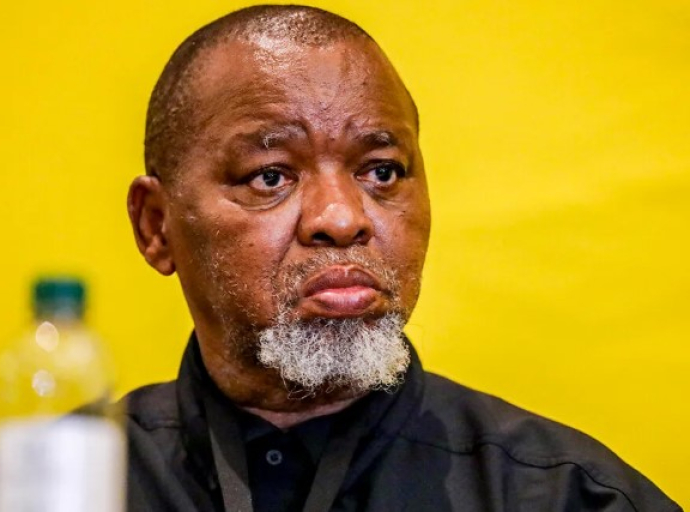
President Cyril Ramaphosa has appointed Gwede Mantashe, the current Minister of Mineral and Petroleum Resources, as the Acting Minister of Police.
Ramaphosa made the announcement on Tuesday evening, stating that Mantashe will oversee police matters while retaining his existing portfolio in mineral and petroleum resources.
The appointment, effective immediately, comes as part of a transitional arrangement until the anticipated assumption of office by Professor Firoz Cachalia at the beginning of August.
Professor Cachalia, who has served in various educational roles, is set to succeed Mantashe at the helm of police leadership following his retirement from the University of the Witwatersrand at the end of this month.
Cachalia's appointment, announced during a televised address to the nation on Sunday, follows KwaZulu-Natal provincial police commissioner, Lt-Gen Nhlanhla Mkhwanazi alleging that a powerful criminal syndicate had infiltrated the country’s law enforcement, intelligence agencies, and even the judiciary.
Mkhwanazi accused Police Minister Senzo Mchunu of interfering in sensitive investigations and colluding with a murder accused businessman to disband a task team probing political killings in KwaZulu-Natal.
In response, Ramaphosa placed Mchunu on special leave and announced the formation of a judicial commission of inquiry, to be led by Acting Deputy Chief Justice Mbuyiseli Madlanga.
The commission is expected to investigate the alleged suppression of investigations, interference by senior officials, and the complicity of government members in organised crime networks.
Mchunu has been at the centre of controversy for the past week after Mkhwanazi accused him of being entangled in a powerful syndicate linked to drug cartels and influential business interests.
In explosive allegations, Mkhwanazi accused Lieutenant-General Shadrack Sibiya, the deputy national commissioner for crime detection, of colluding with Brown Mogotsi, an information dealer from the North West, and Mchunu, in an alleged plot to disband the KwaZulu-Natal political killings task team that has been at the centre of recent law enforcement efforts.
Mkhwanazi accused Mchunu of disbanding the task team in March, effectively withdrawing 121 active dockets, many of which were linked to politically motivated killings.
He presented WhatsApp messages, South African Police Service (SAPS) documents, and cellphone records, alleging a coordinated effort to dismantle the unit.
Mchunu, in a December 2024 letter to National Police Commissioner Lieutenant General Fannie Masemola, claimed the unit had “outlived its usefulness.”
In a decisive step, Ramaphosa not only announced the establishment of a Judicial Commission of Inquiry, but he also placed Mchunu on special leave.
On Tuesday, Masemola announced that Sibiya has been requested to take a leave of absence until investigations have been completed.
The Brenthurst Foundation, a Johannesburg-based think tank established and funded by the Oppenheimer family, has seemingly closed down.
This is after two decades of helping to formulate policy to drive Africa’s development through political and economic research, as well as high-level government dialogues.
Research director at the foundation, Ray Hartley, revealed the closure in a post on LinkedIn, where he described his time at the institution.
“Friends, I’m sure you have heard by now that The Brenthurst Foundation has closed its doors. As a result, I am no longer working there,” Hartley said.
“It was an incredible six years, which involved travel across Africa and the world, writing countless discussion papers and op-eds.”
The foundation has deleted the content from its social media pages, with some of them rendered disabled.
Hartley said that some of his highlights included observing elections in Somaliland, Kenya, Lesotho and Liberia. He also visited Ukraine to analyse the ongoing conflict between the country and Russia.
He also worked on strategic plans for Zanzibar, Malawi, Lesotho, Kenya, and Nigeria, while editing or co-authoring books such as Better Choices, In the Name of the People, and The Good, The Bad, and The Ugly.
Hartley and his colleagues also worked behind the scenes to help build South Africa’s political centre, including the Government of National Unity (GNU), to prevent a populist collapse.
“It was a privilege to work in the small team led by Dr Greg Mills, a man whose reach, insight, and influence are truly remarkable,” Hartley said.
There is no clarity on why the foundation has seemingly closed its doors. However, it is likely a result of a lack of funding from its backers.
Hartley said the foundation did not receive any funding from the United States or any foreign government, directly or indirectly.
As such, its closure is not a result of the United States reviewing and shutting off some of the funding it provides to various organisations in Africa.
Daily Investor asked The Brenthurst Foundation and Oppenheimer Generations for comment, but they did not respond by the time of publication. Their comment will be added once it is received.
South Africa’s illustrious Oppenheimer family created the foundation as the next step of its Brenhurst Initiative. Brenthurst is famously the name of the family’s residence in Johannesburg.
Both Nicky, son of the legendary businessman Harry Oppenheimer, and his son, Jonathan, were heavily involved in The Brenthurst Foundation through their organisation, Oppenheimer Generations.
The initiative was designed to instigate a debate in South Africa around policy strategies to achieve higher rates of economic growth.
It focused on developing a system of tax incentives and penalties to encourage black ownership of companies and businesses, thereby increasing their participation in the economy.
Today, the foundation has a broader African focus and aims to find ways to draw the investment needed for continental development and economic prosperity.
The organisation shifted its focus towards creating a conducive environment for economic reform to attract investment and strengthen Africa’s place in the global market.
It works to set up government policy platforms for economic development through organising high-level governmental dialogues.
The foundation also supports economic and political research on topical and important issues, and disseminates practical policy advice to relevant actors.
It has been described as a frontier of knowledge for strengthening Africa’s economic performance and even funded policy study tours for African officials to several countries.
The foundation is clear in saying that it only works at the invitation of African governments and does not impact on their sovereignty in any form.
Over the past two decades, it has become an extremely influential organisation on the continent and has drawn the support of many powerful politicians.
Its advisory board is populated with individuals such as former Nigerian President Olusegun Obasanjo, former President of Botswana, Ian Khama, and former South African President Kgalema Motlanthe.
The foundation also uses international expertise, including former Chairman of the Joint Chiefs of Staff in the United States, Richard Myers, and former Secretary of State for International Development in the United Kingdom, Rory Stewart.
It also has a diverse network of experts in various fields that are part of its associates to aid the foundation’s formulation of policy.
Daily Investor reached out to The Brenthurst Foundation, Ray Hartley, and Oppenheimer Generations for further comment. It was not received before publication and will be added once it is available.
*This article was first published by Daily Investor
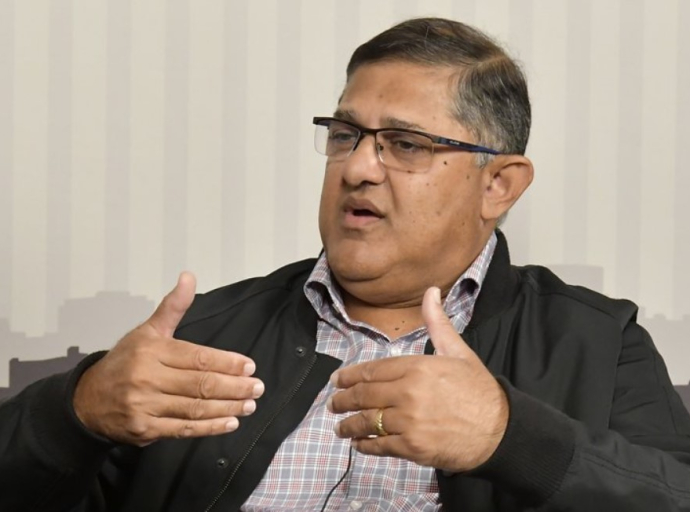
Deputy Minister of Forestry, Fisheries and the Environment, Narend Singh, has warned that the world is rapidly running out of time to meet critical sustainability and climate targets – and called for accelerated, coordinated global action.
Speaking at the second G20 Environment and Climate Sustainability Working Group (ECSWG) meeting in Skukuza, Kruger National Park, on Tuesday, Singh stressed the urgency of delivering on the Sustainable Development Goals (SDGs) and broader climate objectives. “We are less than five years away from our deadline to achieving the SDGs and the end of this critical decade for climate action,” he said. “Yet we are still far from attaining these goals and action targets.”
According to Sustainable Development Goals: Country Report 2023 prepared by Statistics South Africa, South Africa's progress towards meeting the SDGs is mixed. While the country has made strides in education, healthcare, water, sanitation, electricity, and gender equality, significant challenges remain, especially in addressing poverty and inequality, which were exacerbated by the COVID-19 pandemic.
Singh pointed to rising poverty levels, increased pollution from hazardous chemicals, and record greenhouse gas emissions in 2023 as indicators of global failure. He said these challenges are exacerbated by unemployment, inequality, environmental degradation, and climate change – all of which are deeply interconnected and demand joint solutions.
“South Africa has placed solidarity, equality and sustainability at the centre of our G20 Presidency,” Singh noted, adding that the current global landscape requires enhanced reforms, inclusivity, and cooperation.
Under South Africa’s presidency, the ECSWG now includes six key priority areas, following the division of Climate Change and Air Quality into standalone themes. Singh said these were carefully selected, building on prior presidencies led by Brazil, India and Indonesia, while aligning with the African Union’s Agenda 2063.
A significant amount of groundwork has already been done. “It is noteworthy that a detailed Communications and Outreach Programme as well as a Work Programme for the G20 ECSWG for 2025 have been developed and a range of technical papers corresponding to each priority area have been drafted,” Singh said.
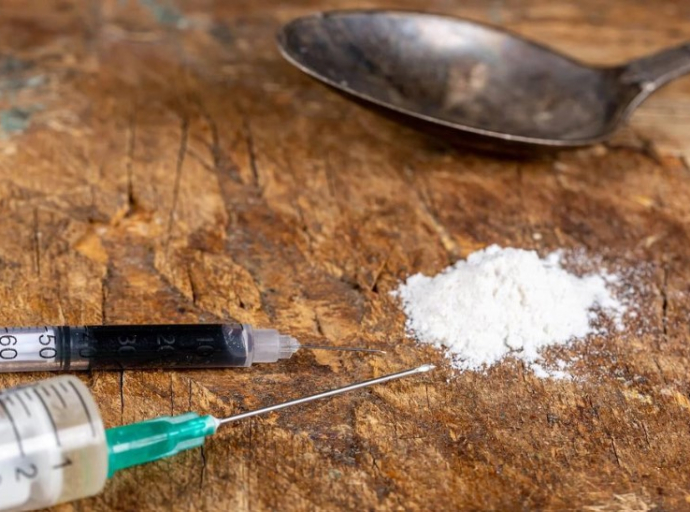
Two suspects arrested in connection with the discovery of drugs worth about R54 million are expected to make their first appearance in the Goodwood Magistrates Court on Tuesday.
The suspects were arrested on Sunday afternoon, after police found tik and heroin during a search of their residence in Goodwood.
The drugs were found hidden in a cupboard and on the roof of the residence.
The Police's Malcolm Pojie said, "Investigation in this matter is conducted by the Narcotics Section located within the provincial Organised Crime Unit detectives. The provincial commissioner of the Western Cape, Lt Gen Thembisile Patekile, praised the members for their dedication in efforts to rid the Western Cape streets of the scourge of drug abuse and trafficking."
*This article was first published by Eye Witness News
The blood trail uncovered by police showed Fleurhof pre-teen Jayden-Lee Meek was murdered in his own home.
A blunt-force head injury was the cause of death, according to the charge sheet presented in the Roodepoort magistrate's court on Monday during the first appearance of his mother, Tiffany Nicole Dunn Meek.
The 31-year-old will stand trial on charges of murder, crimen injuria, attempting to defeat or obstruct the course of justice, and defeating or obstructing the administration of justice. She remains in custody pending a bail hearing on Friday.
The document states she is alleged to have hit or struck him with an as-yet unknown object.
The grade 6 pupil at the Royal College in Florida, on the West Rand, was last seen on the afternoon of May 13 when he was dropped off at his family's apartment complex by scholar transport. He was reported missing to police shortly before midnight. A search was initiated, and his body was found on the stairwell outside the flat early the next morning.
“The child’s bed had blood on it. His school clothing and bag were found in the accused's house or unit, with one of the schoolbooks having blood on it,” the charge sheet stated.
“Forensic analysis confirmed that the blood was of the deceased, and various other evidence confirmed the deceased was harmed in the house.”
When Tiffany reported him missing, she allegedly indicated the child did not return from school, as she said she would not be suspected and her house would not be searched, the state alleges. As a result of her actions, other people came under suspicion and their houses were searched.
The deputy minister of police, Shela Polly Boshielo, and deputy national commissioner of police, Lt-Gen Tebello Mosikili, attended the court case on Monday.
“It is unfortunate that Jayden was killed and found in the very space where he should have been safe and secure ...his residential complex,” Boshielo said
The investigating and tracking teams have been hard at work to follow all leads and gather the necessary evidence to present a case that would be able to stand up in court, she said.
“Our investigating team was working closely with the National Prosecuting Authority on this case.”
She said the investigation had not been an easy one. Police received a lot of backlash for their response to the murder and the time it took to find the information that led to an arrest.
“We will be following this case closely until there is a successful conviction in this matter. At this stage, we cannot rule out the possibility of more arrests as investigations into the murder of Jayden-Lee continue,” said Boshielo.
Mosikili said at this stage, the motive for the murder was unknown: “Both the provincial team as well as the Florida team are working on uncovering what could have been the motive for the murder.”
Action SA has reiterated its calls to amend section 27 of the Constitution to curb access to public healthcare for undocumented foreign nationals, amid Operation Dudula’s crackdown at public clinics, which human rights watchdogs have criticised for constitutional violations.
ActionSA parliamentary chief whip Lerato Ngobeni said the party had tabled constitutional amendment proposals in May, arguing that the public health system was “buckling” under the pressure of providing free care to non-citizens.
Ngobeni claimed that some clinics reported that up to 70% of patients seeking services were foreign nationals, and this had led to South Africans being “crowded out” of already overstretched facilities.
“South Africa is expected to carry this burden indefinitely, when other countries do not even allow entry without proof of medical insurance,” she said in a recent statement.
The SAHRC said blocking people from receiving healthcare services is unconstitutional. Referencing section 27(1) of the Constitution, the commission reaffirmed that “everyone has the right to have access to healthcare services”. It noted that section 27(3) guarantees that “no one may be refused emergency medical treatment”.
The commission voiced alarm about reports of intimidation by Operation Dudula at health facilities in Hillbrow and Rosettenville in Johannesburg. They demanded documentation at clinic entrances and turned away people without documents. In some cases, they inspected patient clinic cards and threatened hospital staff.
“The commission would like to remind members of the public and civic groups that access to healthcare is central to the right to dignity, the right to life, and the right to equality. The denial of healthcare on discriminatory grounds undermines the constitutional promise of a just, inclusive and caring society,” the SAHRC said.
It cautioned citizens against taking the law into their own hands and making it difficult for people to get medical care because of their nationality. “It is important to note that no civic group or individual has the legal authority to control access to public health facilities or to enforce immigration laws.”
The power to inspect, arrest, or detain undocumented people lies solely with the Department of Home Affairs, supported by the South African Police Service when lawfully required, the commission said.
Operation Dudula, now a registered political party, has said its actions are “community interventions”. National organiser Zandile Dabula told public broadcaster SABC last week that migrants should only receive emergency care “after they are arrested for violating immigration laws”.
In an interview with the Mail & Guardian, she denied that Operation Dudula’s actions at public clinics amounted to xenophobia, saying they were necessary because of government inaction.
Legal experts have said such actions could constitute violations of the Constitution and the National Health Act, which does not permit discrimination based on nationality or legal status.
International human rights frameworks, including the United Nations Refugee Convention and the African Charter on Human and Peoples’ Rights, also obligate South Africa to provide basic healthcare to all people in its borders.
Pierre de Vos, a constitutional law expert at the University of Cape Town, has previously argued that section 27’s language is unambiguous and applies to all people, not just citizens.
He said that amending this section would require a two-thirds majority in the National Assembly and approval from at least six provinces in the National Council of Provinces.
In Gauteng and KwaZulu-Natal, nurses and doctors have raised concerns about staff shortages, long queues and under-resourced clinics.
The department of health has not endorsed ActionSA’s stance, but it has acknowledged systemic pressure driven by increased demand, insufficient infrastructure and budget constraints. It says undocumented migrants can get primary care services, with more restricted access to specialised care.
Civil society organisations, including Kopanang Africa Against Xenophobia and Section27, have called for urgent intervention to halt Operation Dudula-led disruptions at clinics. Legal proceedings have been launched in the Johannesburg high court seeking interdicts against the party’s actions, with judgments expected later this year.
As the 2026 local government elections draw near, Action SA is expected to campaign on a platform that includes stricter immigration enforcement and constitutional reform.
The party argues that South Africa must “rebalance” its humanitarian commitments with resource constraints, but critics warn that such rhetoric risks fuelling xenophobic violence.
*This article was first published by Mail & Guardian