Free State Targets Surgical Backlogs
The three-day Cataract Marathon, held over the weekend at Boitumelo Regional Hospital in Kroonstad, was a great success, with over 100 patients receiving treatment.
Screening was conducted last week Friday with cataract operations scheduled for Saturday and Su...
This follows the release of a report into the Lancet Global Health investigational study that found that substandard anti-cancer medications are being sold and marketed in some sub-Saharan African countries.
The South African Health Products Regulatory Authority (SAHPRA) said all cancer medication used in the country meets the relevant health standards.
This follows the release of a report into the Lancet Global Health investigational study that found that substandard anti-cancer medications are being sold and marketed in some sub-Saharan African countries.
After the report, SAHPRA started internal processes to verify whether any of the South African-registered medicines might have been affected or implicated.
Spokesperson Yuven Gounden said the authority has found that none of the medicines marketed or sold in Africa are affected by the findings.
"SAHPRA is satisfied that the marketed and registered cancer medicines meet the appropriate specifications. Therefore, no substandard cancer medicines were detected."
*This article was first published by Eye Witness News
In yet another sign of deep divisions between Government of National Unity (GNU) partners, the ANC and DA, the Presidency has accused the DA of being part of a right-wing nexus that seeks to use a foreign state to effect changes to democratically developed national policies in South Africa.
This was in response to a statement DA international relations spokesperson Emma Powell issued on Tuesday claiming that President Cyril Ramaphosa had been fully aware that his “Special Envoy” to the US Mcebisi Jonas was not welcome in Washington D.C.
She also claimed the US government had rejected Jonas’s credentials and informed the Presidency that he would not be recognised as South Africa’s official interlocutor.
“The Ramaphosa administration was explicitly advised on multiple occasions that Jonas was not acceptable to Washington and was urged to appoint an alternative envoy. Despite these clear and repeated communications, the Presidency continued to mislead the public by insisting that Jonas remained the President’s special envoy to North America, responsible for leading the charge in repairing bilateral relations between our two countries.”
Powell said the Presidency owed South Africans an explanation as to how it can justify having doubled down on the appointment of a rapporteur whose credentials have been officially rejected by the host government.
“The DA will take all necessary steps to demand the immediate appointment of a credible envoy, capable of repairing the immense damage that has now been done,” she said.
In a statement Tuesday night, the Presidency accused the DA of spreading disinformation on matters of international relations and diplomacy as official government policy.
The DA’s latest effort to embarrass President Cyril Ramaphosa’s Special Envoy to North America, Mr Jonas Mcebisi, involves claims - in the DA’s framing – that the United States has rejected Mr Jonas’s “credentials” and that Mr Jonas is therefore unable to perform his role as Special Envoy.
“The DA seeks to add sensationalism to its claim by suggesting President Ramaphosa and Mr Jonas face a crisis in view of the United States’ pending implementation of trade tariffs announced several days ago by President Donald Trump. The facts around this matter include the reality that Special Envoys do not present diplomatic credentials to host countries in the way designated Heads of Mission or other diplomats are.”
Jonas’s outreach does not in any way supersede the leading role played by the Department of Trade, Industry and Competition (DTIC) and the Department of International Relations and Cooperation (DIRCO) in trade negotiations with the US, or in diplomatic relations with this longstanding partner.
“The Presidency is therefore concerned about the Democratic Alliance’s persistent campaign against South Africa’s national interest and its posture of trying to embarrass and belittle our country and in this specific circumstance, Mr Jonas. This campaign has its origins in a Democratic Alliance visit to the United States earlier this year, to advance an ideological agenda rather than our national interest.”
The Presidency said the DA was trying “cheaply but dangerously” to exploit a critical engagement between South Africa and the US to protest Ramaphosa’s removal of Andrew Whitfield as Deputy Minister of Trade, Industry and Competition.
“The DA’s pronouncements and insults against countries and international organisations – such as the Republic of Cuba or the United Nations Relief and Works Agency for Palestine Refugees – offends South Africa’s international relations and posture.
“If the DA were to succeed in undermining South Africa relations with various nations or institutions, the party would harm the viability of businesses and livelihoods of hundreds of thousands of South Africans who work in sectors that depend on the expansion of our trade relations with the world.”
As the Public Protector’s office prepares to investigate Police Minister Senzo Mchunu over allegations of abuse of power and misconduct, Public Protector Kholeka Gcaleka has stated her commitment to maintaining impartiality throughout the process despite past ties.
Gcaleka, who previously served as Special Advisor to Mchunu during his tenure as Minister of the Department of Public Service and Administration, assured the public that her office’s investigation would adhere to the highest standards of constitutional integrity.
The investigation was initiated last week following a complaint by the African Transformation Movement (ATM), which accused Mchunu of collusion with prominent business people and alleged involvement in obstructing investigations into criminal activities within the South African Police Service (SAPS).
The ATM’s allegations are backed by WhatsApp messages, audio recordings, and financial documents suggesting Mchunu’s links to figures like Brown Mogotsi and Vusimuzi 'Cat' Matlala, who faces murder charges.
In response to questions about a potential conflict of interest, Gcaleka told IOL that her office's adherence to constitutional mandates remains intact.
"The constitution requires my office to act independently and impartially. To ensure objectivity, all investigations are subjected to rigorous review processes, including evaluations by senior investigators and legal teams.”
“Section 13(a) of the Public Protector Act mandates that all members serve independently and without bias. Our investigative procedures are designed to uphold these principles, regardless of previous associations,” said Ndili Msoki, PPSA Legal Advisor.
The ATM’s complaint, led by Member of Parliament Vuyo Zungula, alleges that Mchunu may have engaged in misconduct by disbanding the SAPS political killings task team, allegedly delaying investigations into politically sensitive cases, and possibly influencing the awarding of a R360 million contract to Matlala.
Zungula urged the Public Protector to probe whether Mchunu’s actions violated the Executive Members Ethics Act (EMEA) 1998.
Gcaleka assured that her office would thoroughly investigate all allegations, including whether Mchunu lied about his relationship with Mogotsi in parliamentary sessions and whether there was undue influence in the awarding of contracts.
However, she also acknowledged that due to the scope of the complaints, the investigation might take longer than the 30 days stipulated by law.
Portfolio Committee voices concerns over correctional facilities' maintenance woes
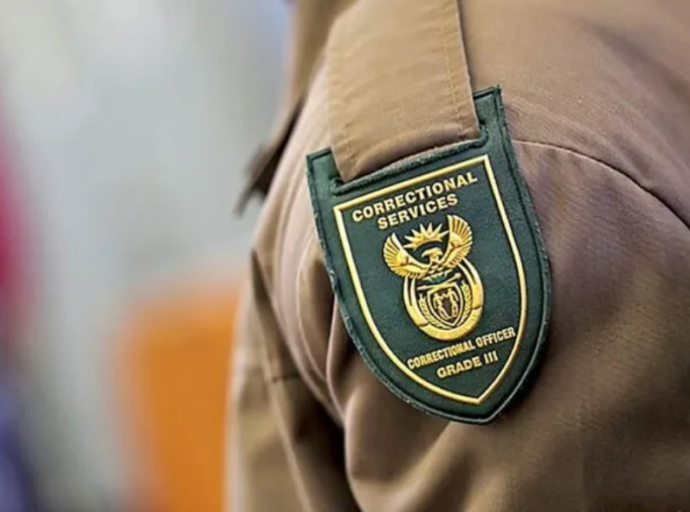
The Portfolio Committee on Correctional Services reiterated its deep concerns about the unsustainable state of correctional facilities across South Africa.
The committee outlined that chronic budget shortfalls have rendered many facilities unable to maintain basic operational standards, threatening the wellbeing of inmates and staff alike.
During the session, the committee received a briefing from the Department of Public Works and Infrastructure (DPWI) concerning ongoing disputes related to user charges, as well as key issues identified during oversight visits to various correctional facilities.
The DPWI highlighted that itemised billing, sanctioned by the National Treasury (NT), has resulted in a staggering shortfall of R24.1 billion since its implementation.
This has raised alarm bells, especially as the rates approved by the NT fall significantly short of what is needed for full cost recovery.
Currently, the DPWI, which serves as the landlord for government properties, receives an average rent of R23.24 per square metre from client departments. In stark contrast, the costs paid to the private sector for maintenance amount to R110 per square meter.
The vast discrepancies have forced the DPWI to operate at a crippling loss, particularly concerning the properties it manages for the Department of Correctional Services.
Over the past five years, DPWI has reported a cumulative deficit of R1.9 billion, averaging losses of R376 million annually.
Committee Chairperson Kgomotso Anthea Ramolobeng said it does not help if one has a beautiful kitchen in a centre with five or six stoves, but only one is working.
"We saw that for ourselves in KwaZulu-Natal,” she added.
She implored the task team to prioritise areas that require immediate attention to avert further deterioration.
“Once inmates are unable to eat or are given one meal a day, it becomes a serious challenge,” she added, stressing the critical nature of regular meal provision in correctional facilities.
South Africa’s 2025 budget review includes a 5.9 percent annual increase in overall health expenditure and a 3.3 percent annual rise for HIV and tuberculosis programmes.
As the world faces a historic HIV funding crisis that threatens to reverse decades of progress, South Africa is emerging as a beacon of commitment, funding 77 percent of its national HIV response and pledging further increases in health and HIV spending over the next three years.
According to UNAIDS’ 2025 Global AIDS Update, released last week, South Africa’s 2025 budget review includes a 5.9 percent annual increase in overall health expenditure and a 3.3 percent annual rise for HIV and tuberculosis programmes, along with plans to invest in health systems infrastructure, including a national chronic medicine dispensing system.
But the report, titled “AIDS, Crisis and the Power to Transform”, warns that South Africa is an exception in a world where funding cuts are devastating HIV services, particularly for children and young women in low- and middle-income countries.
In 2024, 620,000 children under 15 living with HIV did not receive treatment, leading to 75,000 AIDS-related child deaths. The year also saw 630,000 AIDS-related deaths globally, with 61 percent of them in sub-Saharan Africa.
“This is not just a funding gap: it’s a ticking time bomb,” said UNAIDS Executive Director Winnie Byanyima. “People, especially children and key populations, are being pushed out of care.”
Adolescent girls and young women aged 15 to 24 are being hit especially hard. In 2024, over 210,000 acquired HIV, an average of 570 new infections every day. Prevention programmes that once protected this group are vanishing as donor funding disappears.
In Nigeria, monthly PrEP (pre-exposure prophylaxis) initiation fell from 40,000 to just 6,000 people, while more than 60 percent of women-led HIV organisations surveyed in early 2025 had lost funding or shut down. In Mozambique, over 30,000 health personnel were affected by funding-related disruptions.
If the crisis continues, UNAIDS estimates 6 million new HIV infections and 4 million AIDS-related deaths could occur between 2025 and 2029.
While 25 countries have pledged domestic increases totalling 180 million US dollars in 2026, UNAIDS warns this is not enough to replace the large-scale donor withdrawals.
Community-led services, crucial for reaching vulnerable populations, are being slashed, while new punitive laws in countries like Uganda and Mali are pushing people further from care.
“There is still time to transform this crisis into an opportunity,” said Byanyima. “Countries are stepping up with domestic funding. Communities are showing what works. We now need global solidarity to match their courage and resilience.”
“In a time of crisis, the world must choose transformation over retreat,” she added. “Together, we can still end AIDS as a public health threat by 2030 if we act with urgency, unity, and unwavering commitment.”
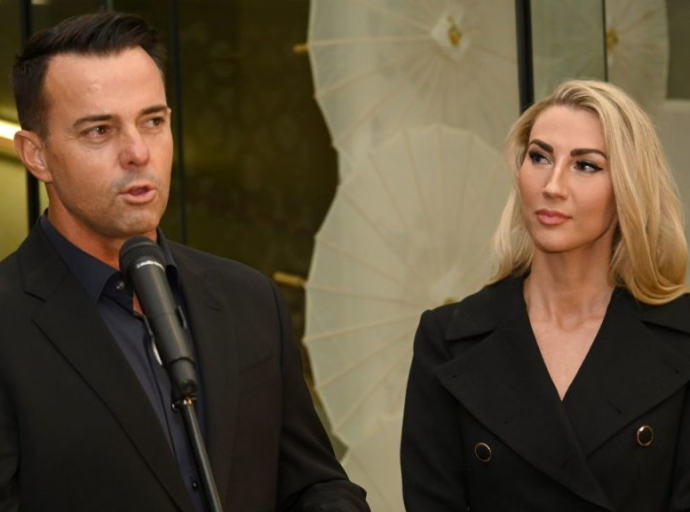
Melany and Peet Viljoen, known for their Tammy Taylor franchise in South Africa, recently shared an extensive video on Melany Viljoen’s Facebook page explaining why they chose to leave the country.
Their departure followed a US court judgment ordering them to pay the original Tammy Taylor US company $4 million (R 71 million) in statutory damages for trademark infringement and breach of contract.
US court judgment and Viljoen’s reaction
The Viljoens explained they received a default judgment from the US court, and although Tammy Taylor demanded $100 million, the final court order awarded roughly $4 million, tied to the now-sold company. Peet argued:
“She might as well have sued the moon. I applied for an interdict in South Africa, but she refused to respond. I also have the order (from the US court).”
He added: “All the order says is that she loses her rights on the trademark in South Africa; she gets $4 million, but this is against the company. I sold that company two years before the default judgment.”
On why they decided to leave South Africa
The couple said their decision to leave wasn’t driven by a single incident but rather a series of distressing experiences. Peet referenced intrusive threats and pressure from individuals allegedly seeking to take control of their business. Their account included:
“It was the constant breaching of our privacy. People arrive at my office with guns, threatening to kill us if we do not sign over the company to Julius Malema.”
They also raised concerns about perceived bias in the judicial system. In Melany’s words:
“For me the last straw was this black woman, Lebohang ‘Bekots Myself’, who got a judgment where the same black judge … signs two orders on the same day, one where Tammy Taylor wins and one where Lebohang ‘Bekots Myself’ wins.”
“That judge is such a clown. These things are not trained to rule on cases. They only give blacks with black lawyers the judgments they want.”
Expropriation and political disillusionment
Peet spoke about worries linked to South Africa’s Expropriation Act, expressing the belief that white-owned property could be seized. Melany said that former US President Donald Trump’s remarks, suggesting Afrikaners are “special” and could find a future in the US, helped crystallise their decision to emigrate.
Peet added that hearing insights from political figures boosted their conviction:
“Then we realised we do not have to sit with the abuse … I started living in fear, and I was not happy in South Africa anymore.”
Planning their future in the US
Now settled abroad, Peet revealed he’s preparing to take the legal entrance exam and build a new legal practice with support from a team overseas. He described selling off their South African assets discreetly to avoid public speculation about their financial status:
“I have to explain to nobody whether I am rich or poor.”
He also took aim at South Africa’s legal system, labelling it “a circus”.