The Betway Premiership is heading toward a dramatic photo finish as league debutants Orbit College find themselves holding the keys to the South African football kingdom. In a classic David versus Gol...
The 16 Premier Soccer League teams in the Betway Premiership are edging closer to the end of a gruelling 10-month season as they prepare for their final two matchday league fixtures.
Mamelodi Sundown...
Former Mamelodi Sundowns midfielder Manqoba Ngwenya believes in-form striker Iqraam Rayners could play a key role for the Brazilians as they enter an important phase of the season with CAF Champions League football returning.
After spending time on the sidelines earlier in the campaign, Rayners has rediscovered his rhythm in the second half of the season. His improved form has not only strengthened Sundowns’ attacking options but also revived his hopes of earning a place in the Bafana Bafana squad ahead of the Fifa World Cup.
The former Stellenbosch FC forward has been instrumental in Sundowns’ recent run of strong performances, scoring 13 goals in 23 appearances in all competitions. His contributions have helped the Brazilians maintain momentum in the Betway Premiership title race, where they remain locked in a tight battle with Orlando Pirates.
Ngwenya shared his thoughts after Sundowns produced a dominant second-half display to secure a 2–0 victory over Orbit College, a result that allowed them to reclaim top spot in the standings.
“Rayners could have scored early in the game if he had been more clinical,” Ngwenya said on SoccerBeat.
“As much as he gave a man-of-the-match performance once again, showing his quality and the player he is, if he could have taken those chances in the first half it would have made it much more comfortable for us. I thought we played a good, patient game. Orbit defended well, but you could tell that Sundowns were going to break them in the end.”
Rayners continues to face strong competition in attack, particularly from Colombian striker Brayan León, who has also been performing well. With domestic duties briefly taking a back seat, Sundowns will now shift their focus to their upcoming Champions League clash against Stade Malien at Loftus Versfeld Stadium on Friday.
Ngwenya believes Rayners should lead the line as the team looks to secure an advantage in the first leg.
“Jayden Adams was suspended in the Betway Premiership, so he comes back in the middle with Teboho Mokoena,” Ngwenya continued.
“I would definitely start with Rayners. He is showing fine form and he is the type of player who always gives defenders headaches, especially playing at home. He will be a handful for the opponents. León is a quality striker who can always come in and add some value at the end.”
Sundowns appear to be finding their rhythm at an important stage of the season. The squad has also recently featured former Pirates midfielder Monnapule Saleng, who has begun settling into the team after joining the club earlier in the January transfer window.
Ngwenya believes Saleng’s adaptation is progressing well and expects the winger to improve further as he becomes more familiar with the team’s playing style.
“I thought it was an efficient performance from him against Orbit. He is still getting used to the style of play at Sundowns and not always having to get the ball and go at players. Sometimes you have to slow the game down, not lose the ball and be patient to find spaces behind the defenders.
“I thought his adjustment was very good in that sense. From game to game his form will improve, and he will get that goal.
"He played a part in the goal, and that should give him confidence. I am happy with his performance. To get 90 minutes was good for him.”
The 48th edition of the Cape Town Cycle Tour took place in the Mother City this weekend, drawing thousands of cyclists to one of the most anticipated events on the local sporting calendar.
Widely recognised as the world’s largest timed cycling race, the event saw more than 30 000 riders take on the challenging 109 km route around the Cape Peninsula, winding past iconic landmarks and offering some of the most breathtaking scenery in sport.
For most participants, the ride is a celebration of fitness, camaraderie and Cape Town’s natural beauty. But this year’s atmosphere shifted after an unfortunate incident involving one of the riders, casting a sombre mood over an event that usually brims with enthusiasm and achievement.
Emergency medical teams stationed along the route responded during the race, but organisers later confirmed that the cyclist had sadly passed away. In a short statement released after the incident, the Cape Town Cycle Tour Trust expressed its sadness and extended condolences to the participant’s loved ones.
“It is with profound sadness that the Cape Town Cycle Tour confirms the death of a participant during the 2026 race following a suspected cardiac arrest,” the organisers said in an official statement.
Out of respect for the family’s privacy, the organisers also emphasised that they would not be disclosing the identity of the rider or specifying the exact location on the route where the incident occurred.
Fatalities during endurance events of this scale are very rare, but they are not without precedent. Medical research into long-distance cycling and running events has shown that serious medical emergencies, including cardiac arrests, can occur even among experienced and well‑trained athletes.
While such incidents remain uncommon compared with the huge number of participants, they are recognised risks in high‑endurance sports.
Intense physical exertion places significant demand on the cardiovascular system, particularly during long events or in the final stages when participants are pushing hardest.
The heart works harder to supply oxygen and nutrients to muscles, and in rare cases, underlying cardiac conditions (some of which may be undiagnosed) can be triggered by the stress of prolonged effort.
Factors such as dehydration, heat exposure and sudden bursts of pace can also contribute to increased risk, even for seasoned riders.
Event organisers are well aware of these possibilities and plan meticulously to ensure participant safety. At the Cycle Tour, medical personnel, ambulances and automated external defibrillators (AEDs) are strategically positioned along the course to provide rapid response if needed.
These precautions, along with pre‑race advice on fitness and health checks, are standard practice at endurance events of this magnitude.
Despite the tragedy, thousands of riders completed the route, demonstrating determination and resilience.
The Springbok Sevens team secured yet another semifinal in the HSBC SVNS series by claiming top honours in Pool A at the Vancouver leg at BC Place on day one of the tournament.
They will face Australia at 22:33 (SA time) on Sunday in the first semifinal of the HSBC SVNS Vancouver, while Fiji and Spain will contest the second semifinal.
South Africa outplayed Great Britain (21-5), Spain (28-7), and New Zealand (17-12) at BC Place to finish top of their pool. They have contested semifinals in Cape Town, Singapore, and Perth in the previous three events, winning at home and in Australia last month.
Good defence laid the foundation for the success of the first day; they missed very few one-on-one tackles, kept their discipline, and outworked their opponents.
They were a bit slow out of the blocks in their first match, conceding a couple of penalties at the breakdown, but once Ronald Brown made a break to score the opening try, more fluency on attack followed. Brown's opener was the only scoring in the first half. Team GB scored first in the second half, but the SA side upped the tempo with several bench players making an impact, such as Ryan Oosthuizen, who—alongside Shilton van Wyk—scored the second-half tries.
Against Spain, it was again a matter of patience. The Spaniards were full of running after a confidence-boosting win over New Zealand in their first game. Brown again opened the scoring as he darted around the blind side from a scrum in the only points of an evenly contested first half.
The second half belonged to South Africa as they tested and overcame the Spanish defence. Sebastiaan Jobb raced in from 70 meters following a great break, and soon after, Shilton van Wyk dotted down after another good attacking spell. Tristan Leyds scored the fourth try and converted, before Spain scored in the last play of the match.
A great start against New Zealand sealed the deal for the Blitzboks. Impi Visser scored after an impressive long-range effort by the skipper, and Shilton van Wyk followed soon after to extend the lead. A third try by Siviwe Soyizwapi late in the first half pushed the lead to 17 points.
New Zealand, needing to win the match to stay in the tournament, rallied well in the second half, scoring twice, but some good turnovers by Selvyn Davids and Dewald Human eased the pressure and allowed the Blitzboks to finish the day unbeaten.
*This article was first published by Eye Witness News
The romantic allure of a Bloemfontein return appears to have outweighed the lure of the pound and euro as Springbok legend Faf de Klerk prepares for a sentimental homecoming.
According to a report by SA Rugby Magazine, the back-to-back World Cup-winning scrumhalf is on the verge of finalising a two-year deal with the Toyota Cheetahs, a move that would see him spurn lucrative interest from overseas giants.
While official confirmation from the franchise remains pending - with the Cheetahs’ recent communications focusing on contract extensions for players like Marko Janse van Rensburg and Matome Manyama - the Bloemfontein-based outfit is reportedly closing in on the signature of the 34-year-old veteran whose contract with the Yokohama Canon Eagles in Japan reaches its conclusion this June.
The shift in scenery is deeply personal, driven by a desire for De Klerk to be closer to their family roots in the Northern Cape and Free State regions. Negotiations with several high-profile suitors, including a potential return to Sale Sharks in England and interest from French Top 14 side Perpignan, reportedly stalled as the scrumhalf set his sights on a South Afri can return.
Despite the massive pay cuts involved in choosing a domestic move over European or Japanese contracts, the Cheetahs have emerged as the frontrunners thanks to the recent financial backing of a local business consortium.
This fiscal stability has allowed Director of Rugby, Frans Steyn, to pursue marquee talent, viewing De Klerk as a vital asset to mentor rising stars in the squad. The move marks a significant full-circle moment for the iconic number nine, who has spent the last four seasons in Japan after a storied stint in the English Premiership.
As his international career enters its twilight years, the prospect of playing in the orange jersey provides a boost to the Free State faithful and adds a legendary spark to the local rugby landscape.
While fans await the final handshake from the Toyo ta Stadium offices, all indications suggest that the ‘Gi ant Slayer’ is ready to swap the neon lights of Yokohama for the familiar horizons of the Free State.
Orlando Pirates remain masters of their own destiny at the summit of the Betway Premiership table, but there is little room for complacency as the title race intensifies.
The Buccaneers face another stern examination on Wednesday when they travel to the Old Peter Mokaba Stadium (7.30pm kick-off) to face off against Polokwane City. It is a fixture that will demand focus as every match is now a must win encounter, particularly with champions Mamelodi Sundowns breathing down their necks.
For Abdeslam Ouaddou’s charges, the weekend marked a swift return to winning ways.
After suffering a narrow 2-1 defeat to Mamelodi Sundowns in their previous league outing, Pirates responded emphatically with a 3-0 demolition of Kaizer Chiefs this past Saturday. The convincing derby triumph has restored confidence within the camp ahead of what could prove to be a tricky encounter in Polokwane.
History favours the Soweto giants. Pirates have dominated this fixture in recent years, drawing just once in their last ten meetings across all competitions with nine wins, in what has been an otherwise commanding record.
On paper, they will once again start as favourites.
Tshepang Moremi is once again expected to play a pivotal role, having emerged as one of the club’s standout performers this season. The winger’s pace and direct running have added a new dimension to Pirates’ attack, and Ouaddou has been vocal in his admiration for the former AmaZulu midfielder.
“He is a really good and interesting player with a lot of qualities,” Ouaddou said.
The Moroccan tactician emphasised that Moremi’s growth has been carefully managed, highlighting the importance of structured development without exposing him to unnecessary external pressure.
“The problem with the modern footballer is there are too many coaches — everyone wants to be a coach. There are coaches on social media and coaches in the stands, and they want to mould players into what they want,” he explained.
“As technicians and coaches, we analyse the qualities of our players. When you see that his main quality is speed, you have to use that quality, create the right environment and put him in the right position to express himself.”
Although Moremi has not started consistently in recent outings, his impact off the bench in those matches underlined why he remains highly rated by the technical team. With stiff competition from the likes of Relebohile Mofokeng and Oswin Appollis, team selection has become increasingly competitive.
Ouaddou believes Moremi’s unique attributes set him apart.
“He is a winger, and a winger uses pace, crosses and shooting, with the capacity to combine in the half-spaces,” he said.
"He cannot always operate in the half-space — that requires different qualities like those of Nkota, Mofokeng and Appollis. He has his own strengths and he is a top player, just different.
“Against Chiefs we used him to maximise his high qualities, and you can see that whenever we deploy him as a winger, he can surprise many people. Those qualities have also enabled him to be part of Bafana Bafana.”
He may have returned to South Africa for shoulder surgery, but Dale Steyn is still keeping a close eye on the Proteas at the T20 World Cup and he spoke glowingly about Lungi Ngidi and Marco Jansen.
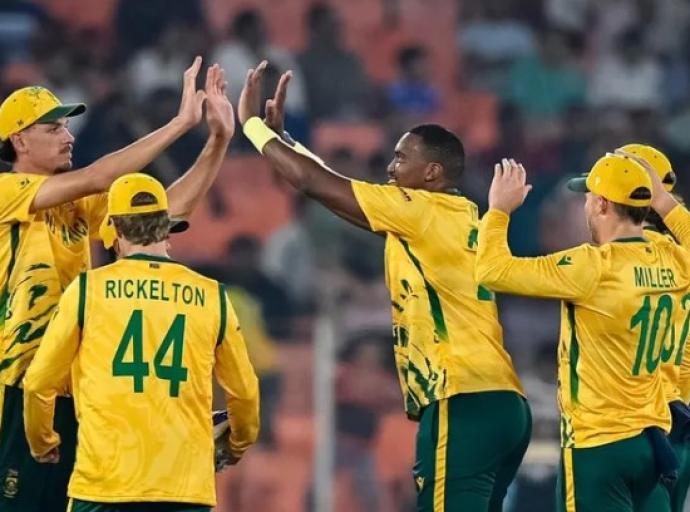
South Africa produced an incredibly dominant display against India over the weekend, as they ran out 76-run victors in their Super Eights clash in Ahmedabad.
First, South Africa posted an imposing 187/7 after falling to 20/3 batting first, and then never allowed host India to get on track with their chase before bowling them out for 111.
Jansen returned the best figures with his 4/22, while Ngidi strangled the Indian attack with a miserly spell of 0/15 which was full of cunning and guile.
Steyn Praises Ngidi and Jansen’s Slower Balls as Best in WC
“There’s obviously plenty of fantastic bowlers at this WC, but talking slower balls specifically, I think the skills of Ngidi and Jansen, as a pair, are the best in the tournament,” said Steyn on X.
“Knuckles from Jansen. Slow dipper from Ngidi. Batters finding it tough to read one dude, and there’s another coming…
“That’s trouble for batters.”
Last week, Steyn left his commentary post at the tournament to attend to his troublesome shoulder.
The 42-year-old has been a revelation in the commentary booth at this tournament, most notably during South Africa’s infamous encounter with Afghanistan, which required two Super Overs.
Steyn did not hold back during that stint, and it was reminiscent of his playing days when he was the star on the field. IOL News
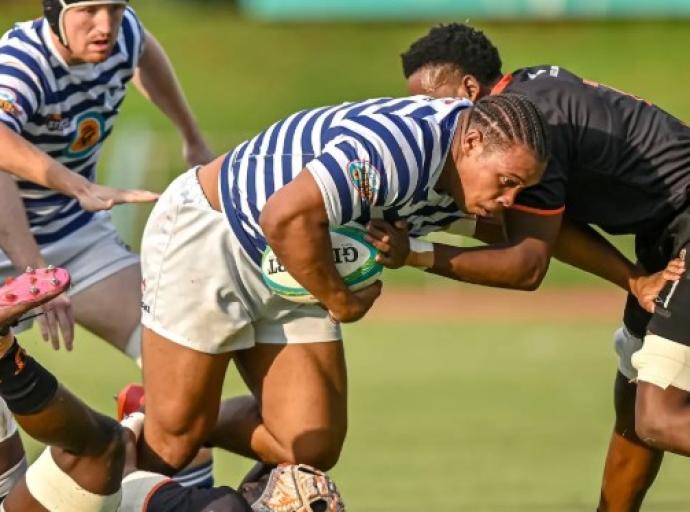
The Varsity Cup is increasingly being viewed as a laboratory for South African rugby innovation, with new rules and formats being tested that could influence the game’s future at higher levels, including the Springboks.
Rugby analyst Jordan Buhrs said the competition has become a platform for trialling experimental ideas before potentially filtering into the wider game.
He noted that technologies and rule changes have historically been introduced in the Varsity Cup environment, and the latest season continues that trend with several new tactical innovations.
New rules designed to promote attacking rugby
Among the most talked-about changes is the tap-try option.
Instead of kicking for a standard conversion after scoring, teams can choose to tap from the 22-metre area and attempt to score another try within 120 seconds. Each team is limited to two attempts per half.
Buhrs explained that the rule is designed to encourage more attacking rugby, more tries and greater entertainment value for spectators.
During the 120 seconds, play continues without stoppages such as scrums, lineouts or drop goals, further increasing the pace of the game.
He said the system also adds a tactical dimension, as teams must decide when to use their limited tap-try opportunities.
Bonus points reward risk-taking rugby
Another innovation is the point-of-origin bonus, which rewards teams for scoring from their own half.
This rule is intended to encourage teams to run the ball more rather than rely on territorial kicking.
Buhrs said it reflects a broader shift towards more attacking rugby in South Africa, pointing to the Springboks’ recent increase in try-scoring under assistant coach Tony Brown.
He added it will be interesting to see whether the playing style being developed in the Varsity Cup filters into professional structures and eventually the Springbok system.
Red card rule also under scrutiny
The competition is also testing a 15-minute red-card rule.
Under this system, a team reduced to 14 players can return to full strength after 15 minutes, rather than playing the remainder of the match a player short.
Burns said this keeps contests fairer while maintaining more ball-in-play time, another priority for organisers trying to make the game more engaging.
He acknowledged that traditionalists may prefer the older system but said the Varsity Cup provides a safe environment to test changes and assess which ideas are worth keeping.
Rugby is at a crossroads globally
The debate around Varsity Cup innovations comes at a time when rugby union globally is discussing the sport’s direction.
Buhrs said the game appears to be at a ‘fork in the road’, with administrators, referees and unions meeting internationally to discuss the shape of the sport.
Despite this, he believes rugby is currently in a strong and balanced position, suggesting stability may be preferable, particularly with a World Cup approaching in the next 18 months.
For South African rugby supporters, however, the Varsity Cup remains a key window into what the future of the Springboks and the national playing style could look like. EYE WITNESS NEWS