As the weather continues to deteriorate across the country, the MEC of Cooperative Governance and Traditional Affairs, Saki Mokoena, urges the public to avoid traveling to snow-affected areas for recreational purposes and to limit unnecessary travel until conditions improve.
This follows the South...
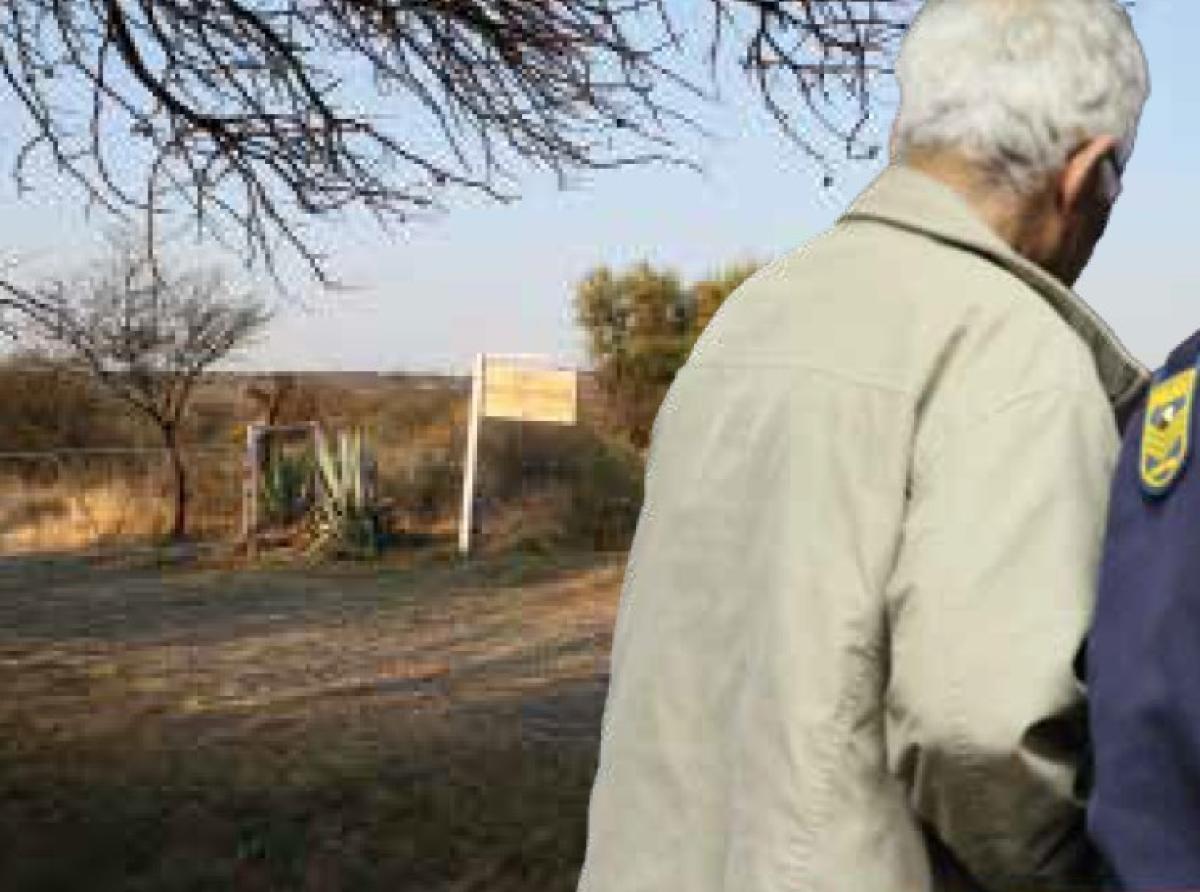
White farmers are being exposed for racism and bad labour practices Picture: Baagedi SetlhoraWhite farmers are being exposed for racism and bad labour practices Picture: Baagedi Setlhora
Farmworkers Black labourers bemoan rampant racism and unjust labour practices at white-owned farms
By: Abigail Visagie
The recent incident involving a white farmer who allegedly killed and buried a 25-year-old man in a shallow grave on his farm has pulled the veil off the widespread racism and ill-treatment that black farmworkers endure at farms in South Africa. The prevalent injustices that casually take place on farms include racial abuse and unfair labour practices. On the sidelines of the ongoing case at the Kroon stad Magistrate’s court, two farmworkers who work for the alleged suspect whose grandson allegedly murdered the abovementioned victim on their farm, claim to consistently endure racial abuse on the farm, while receiving meagre financial compensation for their hard labour. Women fund launched to empower entrepreneurs White farmers are being exposed for racism and bad labour practices Picture: Baagedi Setlhora “He loosely used the K-word when he refers to us and even refers to poor white people as ‘wit K*ffirs’ (white K-word),” said one of the farm workers. They mentioned that the suspect also refers to them as birds and once he has his gun, he uses phrases like “I’m going to hunt for some birds now,” referring to the farm workers. The farm workers further alleged that their salary amounts to R5000. “If we’re late by just a minute, he deducts R600 from our salaries. “Some of our family members who are also working on the farm haven’t been paid for two months and whenever they inquire, the farmer calls them ungrate ful K*ffirs,” said the other worker, as they alternated in their respective responses. “You can see how much we are hated by the farmer simply by his actions. He does not want us there but is forced to have us there since he needs the farm maintained,” The farm worker further mentioned that there are no payslips and that their payslips along with the deductions are written on a doctor’s note. A reliable source who’s also a resident of Kroonstad, alleged that the suspect, a medical doctor by profes sion, also refuses to assist people of colour and would keep a distance between people of colour and himself if they’re in a queue together. In a separate incident, 36-year-old Pieter Cloete (not his real name) who works on a farm in Bainsvlei, Bloemfontein, mentioned that white farmers often show superiority in the most unconventional ways. When I inquire about this, my boss deducts money from my salary, which is literally R300 for two days,” said a disgruntled Cloete. Cloete, a husband and father of four said that he stopped attending school meetings because he can no longer even afford to pay for school fees. “I am dis graced when I look at my children because I can’t even buy them birthday gifts or school shoes, nothing. The fact that my boss’ children are well taken care of while mine suffer in agony clearly indicates that the white farmers really hate us and do not want to see us grow and contribute to the economy,” said Cloete. The farmworker who has been desperately hanging onto this job, mentioned that one of his colleagues requested an emergency leave and was dismissed immediately on the spot. “Whenever you mention issues of a delay in salaries, not being registered with labour or simply requesting for time off, you get dismissed and unfortunately, there is no one to hear our concerns because we are even disregarded by our own society,” said Cloete. Another anonymous farmworker from Bloemspruit mentioned that he has no qualms with his boss but the wife who oversees their administration often uses the K-word when referring to them and multiple racial slurs. The anonymous worker further highlighted that he too has not yet been registered with the department of labour and is afraid to mention this to his superiors as he fears to lose his job. recommended. It creates certainty on the terms and conditions of employment that will bind the employer and employee. The employer can enter two types of contracts with a farm worker: a permanent contract for an indefinite term and a fixed-term contract for a specific period (seasonal work), which shall end on a predetermined date- something that most farm workers are struggling to obtain. 34-year-old Amos Phali* was recently dismissed on a farm in Bainsvlei after he was caught simply speaking to an official of department of labour which he claims he personally knew. “The mind set of white farmers remain the same: Us and them and unfortunately we experience hatred f irsthand as farm workers,” said Phali. Phali further stipulated that regardless of thirty years of freedom, farm workers bear the grunt of Apartheid notions where the white employer does not even hide finding the black worker intolerable. “The moment my employer caught me talking to a dear friend who so happens to be a labour official, he physically threw me off his farm, saying that I was disobedient and cannot follow rules. That time, he knew how badly I needed this job since I just had a baby, if this doesn’t show hatred, I don’t know what does,” said Phali. Free State MEC for Small Business and Economic Development Toto Makume. Picture: Baagedi Setlhora By: Abigail Visagie MEC for Small Business and Economic De velopment Toto Makume was among the delegates who attended the launch of the R30 million Women Entrepreneurship Fund launched by Minister of Small Business Stella Nd abeni Abrahams last week in Mpumalanga. Makume says the fund is aimed at formalising informal businesses and enhancing capacity build ing progress in small businesses. In a one-on-one interview with Journal News, Makume said the fund aims to close the gender gap in access to finance and elevate women-led enterprises across South Africa’s business land scape. “I’ve worked for my deceased boss for 20 years and I’m still not registered with the department of Labour. “I can see the hatred in Mevrou’s eyes when we speak to her and I even let it be when my salary is delayed because I am not educated and I cannot afford to lose my job,” said the anonymous worker. According to the Consolidated Employer’s Organ isation, a formal contract of employment is highly “I thought it was normal to use the K-word since that is what Mevrou calls us all the time.” These are the words of an anonymous Bainsvlei farmworker who seemed confused when it was high lighted that using the K-word or other racial slurs are considered a serious crime in South Africa. The increasingly deep-rooted hatred towards black people becomes more evident as killings of black farm workers sky rocket.