
News
JOURNAL NEWS NETWORK - LATEST EDITION - 14AUG2026
Dive into the top stories with Journal News Network’s latest edition.
• Soft copy available now.
⬇️ DOWNLOAD YOURS: JNN - LATEST EDITION - 14 AUGUST 2026...
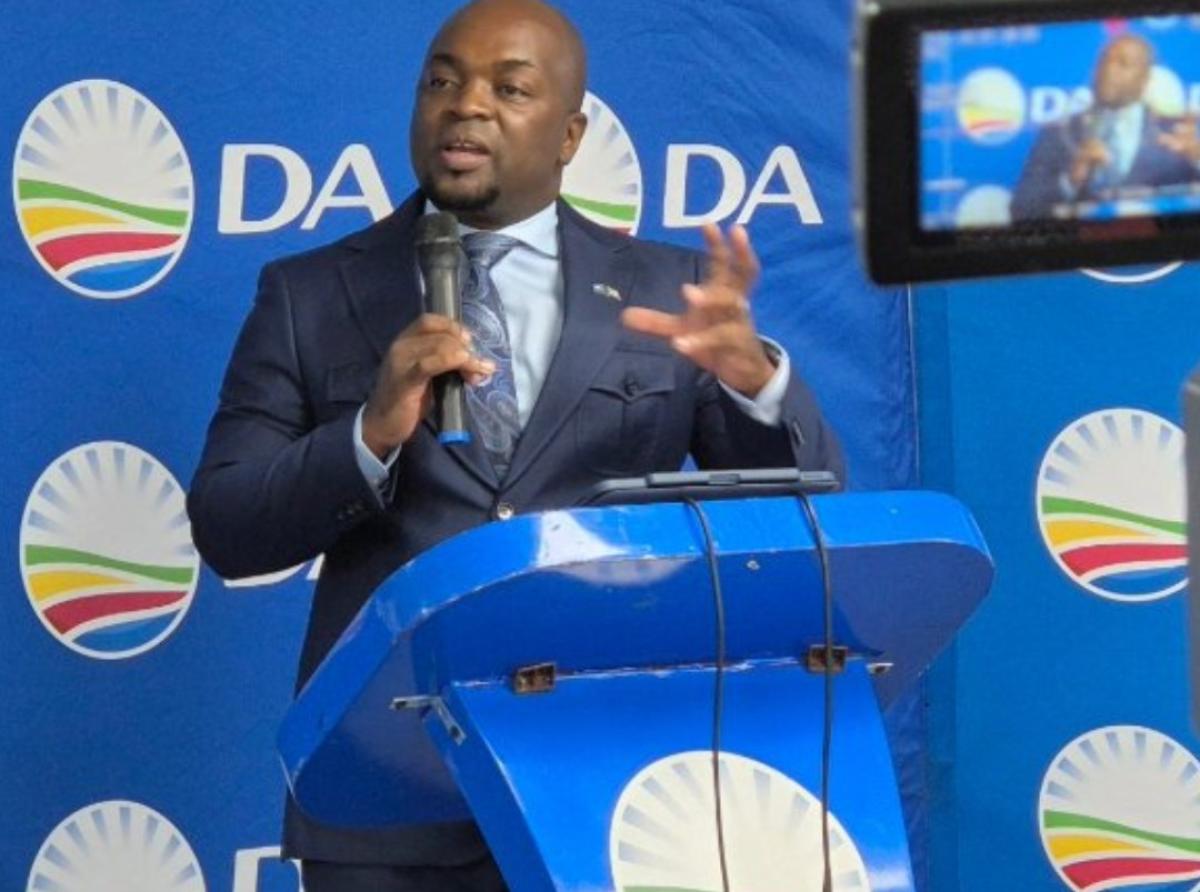
Newly elected DA Federal Executive Chairperson Solly Msimanga has framed his victory as both a personal milestone and a strategic turning point for the party, promising organisational renewal and a push into areas where the DA has historically struggled to grow.
Speaking shortly after his election at the party’s Federal Congress, Msimanga said his leadership mandate reflects ideas he first presented to the party years ago, but which have only now gained broader support.
“Well, I’m glad that something that I spoke to the party about in 2018—and unfortunately at that point I didn’t get, you know, the mandate to, you know, be in that leadership so that I can implement, is now something that has been accepted, you know, now in 2026.”
“I’m excited that we can now go and make sure that we grow the party in areas that we haven’t been growing. And we are now going to be representing, or presenting, a South Africa that the people of South Africa can look at and say they can see themselves in there. This is something that I’m hoping that we are able to then, you know, take going forward,” he said.
At the centre of his vision is repositioning the DA as a party that resonates more broadly across South Africa’s diverse electorate. Msimanga said the goal is to present “a South Africa that the people of South Africa can look at and say they can see themselves in.”
His comments come at a critical moment for the DA, which has faced persistent questions about its ability to expand beyond its traditional voter base and appeal to a wider cross-section of the country.
Beyond electoral growth, Msimanga placed strong emphasis on internal reform, echoing broader leadership messaging at the congress about strengthening the party’s organisational capacity ahead of upcoming elections.
“You cannot go into elections, whether it’s 2026 or 2029, if you haven’t really strengthened your internal capability and organisational structure,” he said.
He described the party’s internal systems as central to its electoral competitiveness, adding that the focus would be on ensuring the DA’s “machinery is very, very well-oiled and extremely capacitated” before entering future campaigns.
This signals a shift towards a more systems-driven approach to campaigning, where internal cohesion, operational discipline, and execution are prioritised alongside messaging.
Msimanga also addressed pre-congress narratives that suggested instability and potential fractures within the party. He dismissed the notion that internal tensions were unique to the DA, instead framing them as part of a normal political cycle.
“Every political party goes through the ups and downs,” he said. “The trick is what happens when you get a moment like this, a moment where you’re able to press a reset button.”
According to Msimanga, the Federal Congress serves that function precisely: recalibrating leadership structures, introducing new voices, and reassessing strategy.
“Well, I think every political party, you know, goes through the ups and downs. The trick is what happens when, when, when you get a moment like this, a moment where you’re able to then press a reset button. And this is what FedEx, this is what the Federal Congress does.”
“It allows you to press a reset button, to set a few, you know, structures in place, to set new people, or, you know, a mixed, a new mix of people in place,” he explained, adding that it also creates space to evaluate past missteps and chart a new direction.
Msimanga pointed to policy resolutions adopted at the congress as evidence that the party is actively responding to both internal and governance challenges. He said these proposals are not only inward-looking but are also intended to shape how DA representatives operate in government.
“Some of the issues that we would want our ministers to be driving much more in government are finding expression in what has been said here today,” he noted.
While he did not outline specific policy details in the interview, his remarks suggest a closer alignment between party structures and governance priorities, particularly as the DA continues to play a role in coalition politics at national and provincial levels.
With national and local electoral cycles approaching, Msimanga’s immediate challenge will be translating the congress’s resolutions into measurable organisational and political gains.
His messaging indicates a dual-track strategy: rebuild internally while expanding externally.
*This article was first published by IOL News

