
News
JOURNAL NEWS NETWORK - LATEST EDITION - 14AUG2026
Dive into the top stories with Journal News Network’s latest edition.
• Soft copy available now.
⬇️ DOWNLOAD YOURS: JNN - LATEST EDITION - 14 AUGUST 2026...
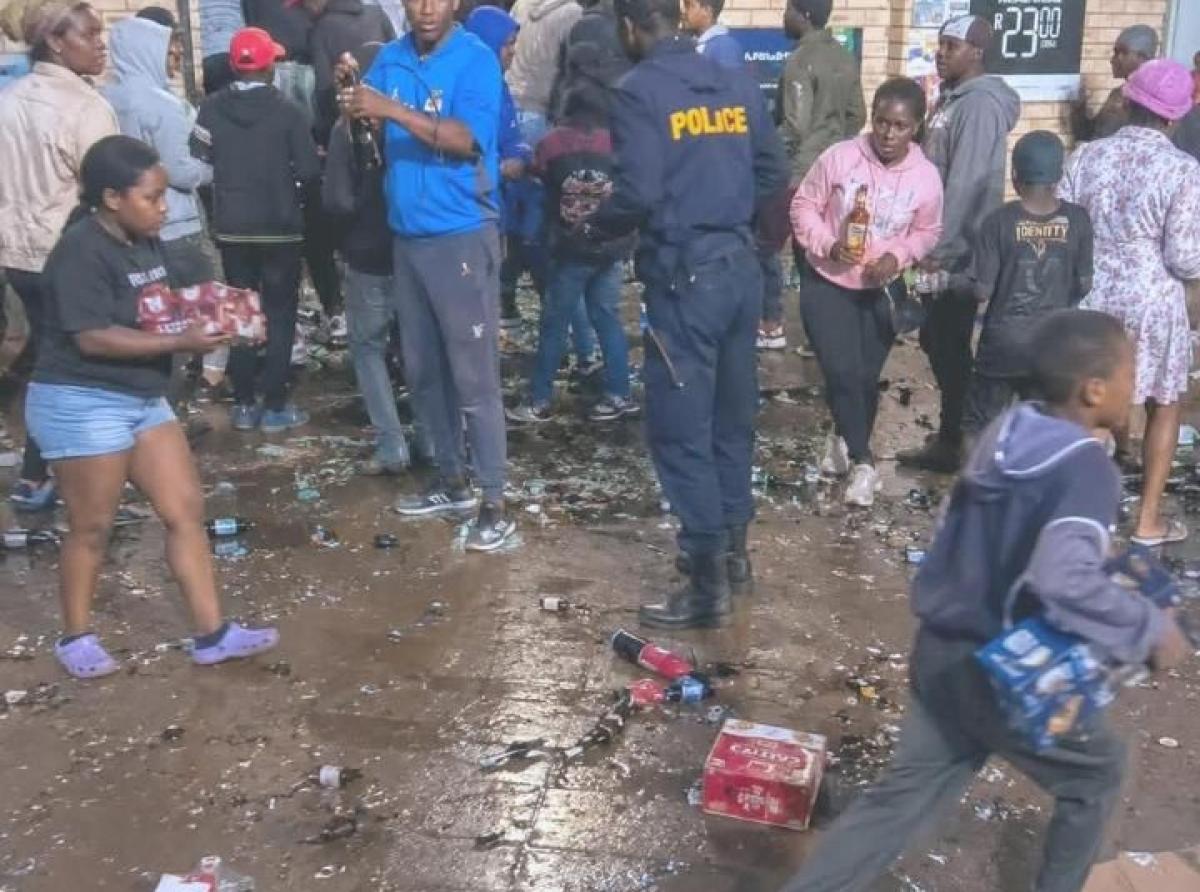
Rising unemployment, pressure on public services and growing tensions around undocumented foreign nationals are fuelling unrest across the Free State, with recent violence in Bloemfontein and Botshabelo exposing the fragile reality facing communities battling poverty and economic exclusion. More than 140 people were arrested during the latest outbreak of unrest in Mangaung, where foreign-owned spaza shops and informal businesses were looted as frustration over crime, joblessness and failing service delivery spilled onto the streets.
Concerns around undocumented foreign nationals, rising crime and worsening unemployment have increasingly sparked protests and community action across the province, highlighting how quickly socio-economic frustrations can escalate into violence.
During the recent unrest in Mangaung, several foreign-owned businesses were targeted as parts of Bloemfontein and surrounding townships descended into chaos. Police moved swiftly to restore order, confirming arrests linked to public violence, looting and property damage.
While authorities strongly condemned the violence, the unrest once again exposed deeper structural challenges facing the province, where thousands of households remain trapped in poverty and survival increasingly depends on informal economic activity.
South Africa’s unemployment crisis continues to deepen, with the country’s official unemployment rate climbing to 32.7% in the first quarter of 2026 after more than 300,000 jobs were lost nationally. The Free State remains among the hardest-hit provinces, recording an unemployment rate of 37.8%, the second highest in the country.
Youth unemployment continues to place enormous pressure on communities, with millions of young South Africans still unable to access meaningful work opportunities. Economists warn that this growing economic desperation is intensifying tensions in township economies where competition for limited income opportunities has become increasingly fierce.
In Mangaung and surrounding areas, limited formal job creation has fuelled the rapid growth of informal trading networks, where both South Africans and foreign nationals operate small businesses in retail, food supply and other services.
Analysts say the overlap between economic exclusion, unemployment and informal trade competition has become a recurring flashpoint in many communities.
These growing tensions formed part of a broader national discussion when the Justice, Crime Prevention and Security (JCPS) Cluster convened an urgent meeting at the Union Buildings on 25 May 2026.
The meeting brought together senior government and security officials, including Justice Minister Mmamoloko Kubayi, Defence Minister Angie Motshekga, Deputy Home Affairs Minister Njabulo Nzuza, senior SAPS leadership and representatives from protest movements involved in recent anti-illegal immigration demonstrations.
Government said the engagement aimed to address rising protests while shaping a coordinated national response to immigration enforcement, community stability and social cohesion.
Although no final policy document was adopted, officials agreed on a draft national framework intended to guide future interventions on xenophobia, racism and related intolerance.
The proposed framework focuses on strengthening coordination between Home Affairs, SAPS and intelligence structures on immigration enforcement, establishing clearer rules for public protests and rolling out social cohesion programmes aimed at preventing violence in vulnerable communities.
Political analyst Sanet Solomon described Mangaung as a “pressure cooker environment” where unemployment, weak service delivery and perceptions of exclusion are colliding.
“The issue is not only immigration,” Solomon explained. “It is the broader reality of communities struggling with limited economic access, where informal trade becomes both survival and a source of tension.”
Economist Professor Frederick CvN Fourie, a Research Fellow at the University of the Free State specialising in labour economics and unemployment, said the province’s weak labour absorption capacity lies at the centre of the crisis.
“When unemployment remains structurally high, especially among young people, informal markets expand by necessity,” he said. “That creates competition for limited consumer spending, and in environments already under pressure, it easily becomes politicised.”
Residents in Bloemfontein and Botshabelo describe daily realities shaped by joblessness, rising living costs and inconsistent service delivery. Informal businesses, many operated by foreign nationals, have become deeply embedded in township economies by providing essential goods and services, but they also increasingly become targets during periods of unrest.
Mangaung Executive Mayor Gregory Nthatisi has appealed for calm, warning that violence and looting only deepen economic hardship in already struggling communities. He urged residents to address grievances through lawful channels rather than vigilantism.
As government works toward finalising a national framework on xenophobia and related intolerance, the challenge remains whether policy interventions can move fast enough to respond to the lived realities of communities where unemployment, migration pressures and social frustration continue to collide daily.

