By Matshidiso Selebeleng
Behind crumbling walls, rusted gates, and broken entrances, a hidden city is quietly growing. In buildings long forgotten by their owners and written off by officials, homeless people — and in some cases suspected criminals — have carved out makeshift homes, dividing rooms with cardboard and turning abandoned offices into fragile shelters. For the homeless, these structures offer protection from the streets, crime, and harsh weather.

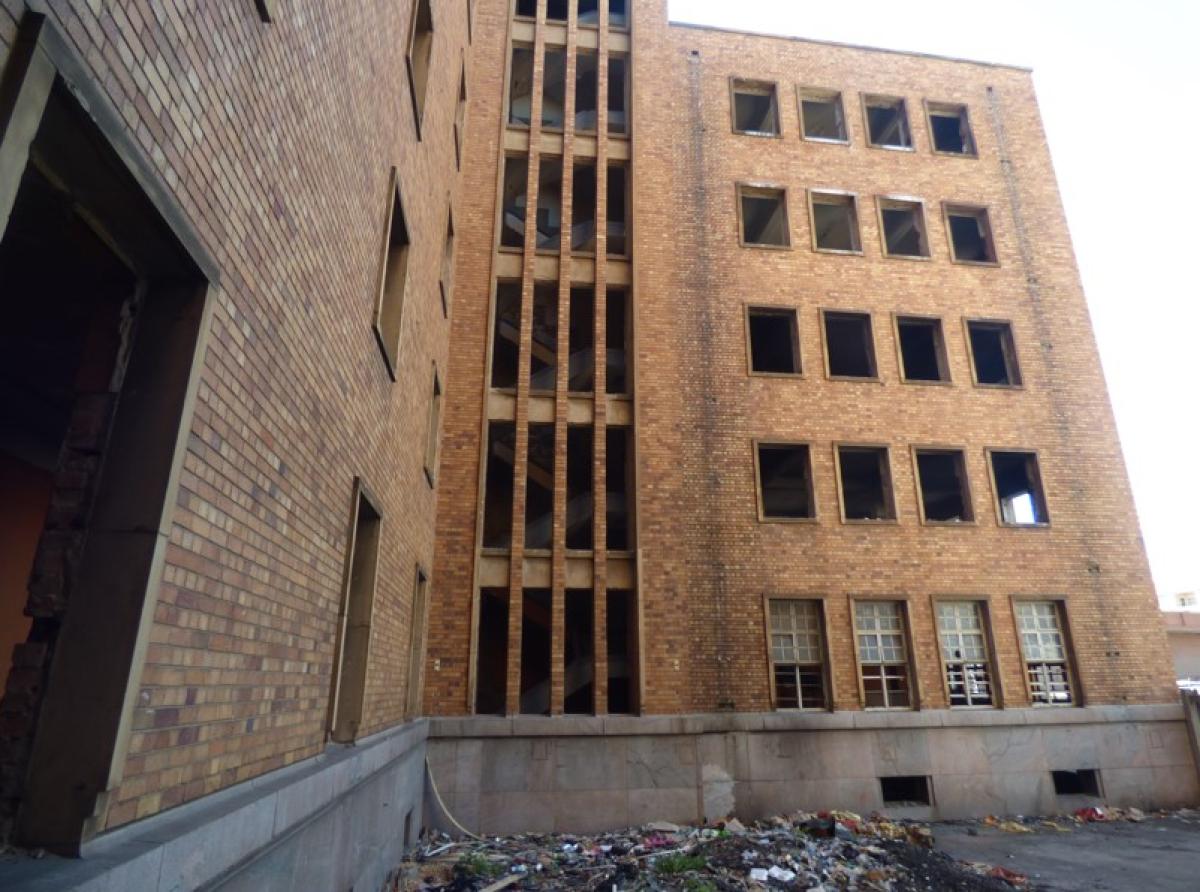
For government and law enforcement, they are ticking time bombs — hubs of illegal electricity connections, fire hazards, overcrowding, and alleged criminal activity. Inside these decaying buildings — deep in the heart of the Free State’s capital, Bloemfontein — lies a stark reflection of a city grappling with urban decay and a worsening homelessness crisis. The Journal News team this week visited the old Post Bank building on the corner of Oos Burger and Selborne Ave in the CBD. What met us was overwhelming. A suffocating, putrid smell clung to the air long before we stepped fully inside. Shattered windows gaped open like broken teeth. Paint peeled from the walls in long, tired strips, resembling old scars. Trash lay scattered across the floors, and a heavy silence hung in the corridors — unwelcoming, unsettling, and deeply disturbing. With no running water, electricity or functioning sewer system, about 20 homeless people and drug users have formed a makeshift community inside the building — co-existing in a world they have designed to suit their survival, even though it is far from habitable. For 32-year-old Thabiso Mokhethi from Botshabelo Section E, the building has been home for him and his girlfriend since last year. After years of living on the streets due to addiction, he says this is the closest thing to stability he has known. “It is not easy living here, but it’s better than being on the streets and sleeping anywhere you can hide your head. In here, at least I can wake up, fetch water and bathe, or start a fire to cook because we don’t have electricity,” he said. Mokhethi admits he can return home whenever he chooses, but for now, he has accepted this life and its hardships.

Crime within the building, he says, is rare among residents. “We trust each other. Problems only start when outsiders come in and steal from us.” He survives by washing cars and assisting with parking in the CBD. When the old Post Bank building shut its doors years ago, no one imagined it would be stripped of its dignity — reduced from a symbol of economic activity to a shell of its former self. Duda Ntemi has lived in the building for two years, after dropping out of school in Grade 11. He says residents feel unfairly targeted. “We are always the first suspects when something happens around here. When police come, they are aggressive and don’t give us the benefit of the doubt,” he said. “Winter is cold here, but we make it work. We just hope the municipality redevelops this place. In a way, we are the ones preventing it from falling apart.” For nearby businesses, however, the building represents more than neglect — it represents loss. “Our businesses suffer because customers are scared to come here. Some get robbed. The smell is unbearable, especially during windy or rainy days. It’s a nightmare, but we are here for our bread and butter,” said Boniswa, a local businesswoman. However, for law enforcement, the challenges created by unoccupied buildings are huge and complex. According to Free State police spokesperson Sergeant Mahlomola Kareli, the number of vacant buildings — particularly in the CBD — is rising steadily, creating growing challenges for law enforcement. “The number of vacant buildings, especially in the CBD, is increasing by the day. In many instances, owners only realise something is wrong when they discover their buildings have been broken into and then open cases of theft,” Kareli said. He added that one of the major concerns is the unofficial occupation of these properties. “You often find that buildings are being occupied without the owner’s knowledge. In some cases, the owner is completely unaware that people are living inside,” he said. Last week, the Mangaung Metropolitan Municipality hosted a Safer City Indaba to address service delivery challenges. During the event, Free State Premier Maqueen Letsoha-Mathae raised concerns about abandoned buildings in the city. She called on the municipality to fast-track the allocation of residential land, repurpose unused properties and partner with investors to unlock economic activity and create jobs. Something is haunting about these abandoned buildings. They carry the city’s layered history — reminders of a time when the CBD thrived. Today, they stand as monuments to neglect, symbols of a service delivery crisis that continues to reshape the face of Bloemfontein.