By Lerato Mutlanyane
President Cyril Ramaphosa used Human Rights Day to push back against growing criticism, delivering a firm and unapologetic defence of South Africa’s transformation agenda while insisting that social justice and restitution remain non-negotiable.
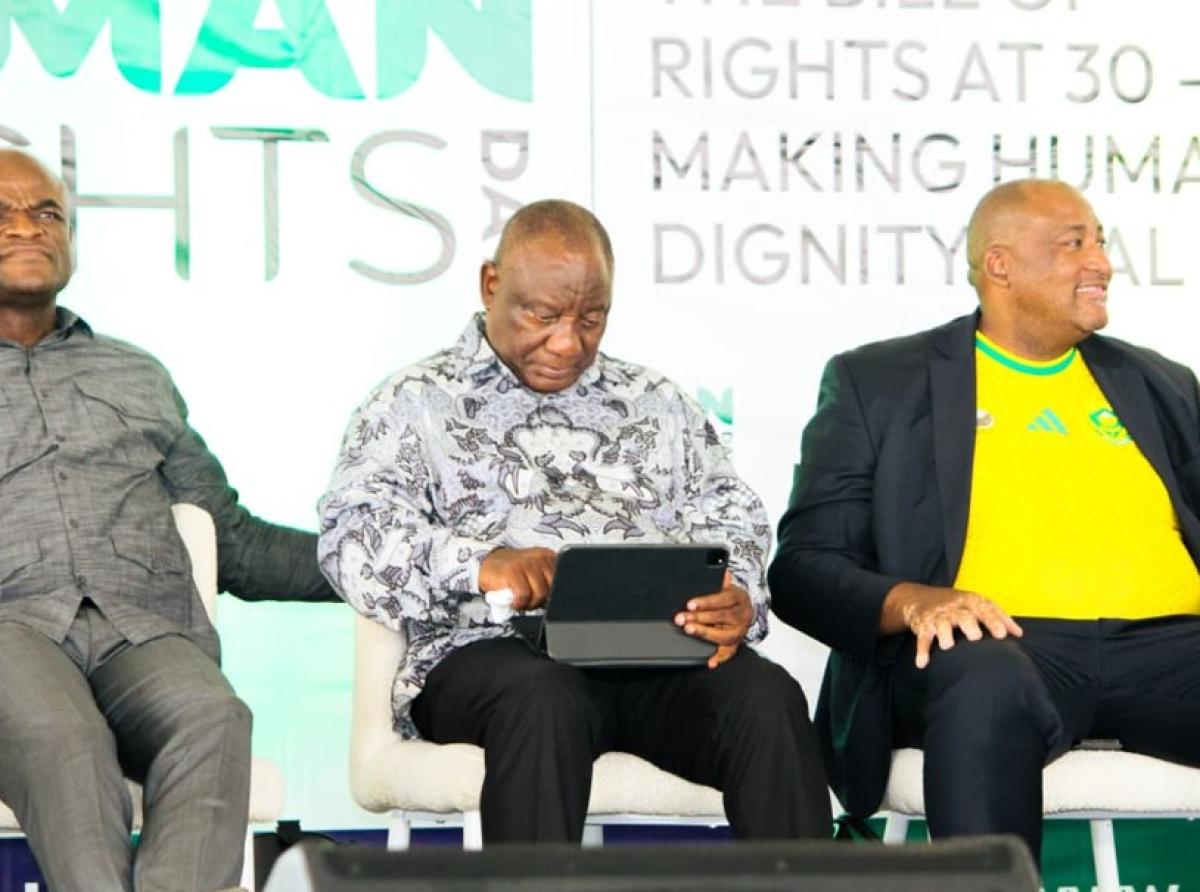
Thousands of South Africans gathered under the blazing Northern Cape sun as Ramaphosa took centre stage at the AR Abass Stadium in Kimberley on 21 March 2026, delivering a powerful Human Rights Day address that balanced reflection with a firm call to action.
Under the theme "Bill of Rights at 30: Making Human Dignity Real,” Ramaphosa honoured the country’s painful past while making it clear: the fight for dignity, equality and justice is far from over.
Joined by Northern Cape Premier Zamani Saul and senior government officials, Ramaphosa invoked the memory of the Sharpeville Massacre, where peaceful protestors stood against apartheid pass laws. He reminded the nation that Human Rights Day is not just ceremonial—it is a moment to measure progress, confront ongoing injustices, and recommit to the ideals of the Constitution.
“It is fitting that the place that had known so much suffering and tears should be the site from which a new South Africa would rise,” Ramaphosa said, describing the signing of the Constitution as the defining moral commitment of the democratic era. He emphasised that the Constitution remains a living guide toward equality, freedom, and human dignity.
The President highlighted that South Africa’s Bill of Rights stands as the cornerstone of democracy, shaped through one of the most inclusive public participation processes in the country’s history. Yet, despite these achievements, serious challenges persist.
According to findings from the South African Human Rights Commission (SAHRC), key concerns include failures in upholding the rights of accused persons, inadequate basic service delivery, racism, xenophobia, and the growing pressures of climate change. Additional reports point to underspending on housing, strained healthcare resources, and delays in critical services such as foster care grants and access to education.
Still, Ramaphosa pointed to measurable progress in restoring dignity. Millions of South Africans continue to benefit from social support systems, including school nutrition programmes feeding over nine million learners and social grants reaching more than 29 million vulnerable citizens. Access to water, sanitation, and free basic services has also expanded significantly, while hundreds of thousands of students from low-income households are accessing higher education.
He also spotlighted cultural restoration efforts in the Richtersveld, where the Nama language—once suppressed under apartheid—is being revived in schools, symbolising a broader reclaiming of identity and dignity.
Yet his message was unequivocal: progress alone is not enough.
“There can be no peace, no progress without justice,” he said firmly, warning against calls to abandon affirmative action, land reform and employment equity policies. “Restitution is not merely about compensation or redress—it is central to building a just society.”
Ramaphosa stressed that true equality will only be achieved when the economy, workplaces and land ownership reflect the diversity of South Africa’s people. Until then, he said, the mission continues.
“The deliverance of social justice remains our priority,” he concluded. “The progress we have made bears witness to the fruits of our efforts—but the journey is not yet complete.”
A call to honour the sacrifices of the past by creating a future of dignity and opportunities was made by Premier Saul, echoing Ramaphosa’s remarks.
“This is our collective resolve to advance human rights, keep democracy and improve the rights of all our people. Together, let us continue working to build a province and a country that honours the sacrifices of the past by creating a future of dignity and opportunities,” said Saul.
For Ramaphosa, the path forward is non-negotiable: justice, dignity and restitution must remain at the centre of South Africa’s democratic project.