By Bernell Simons
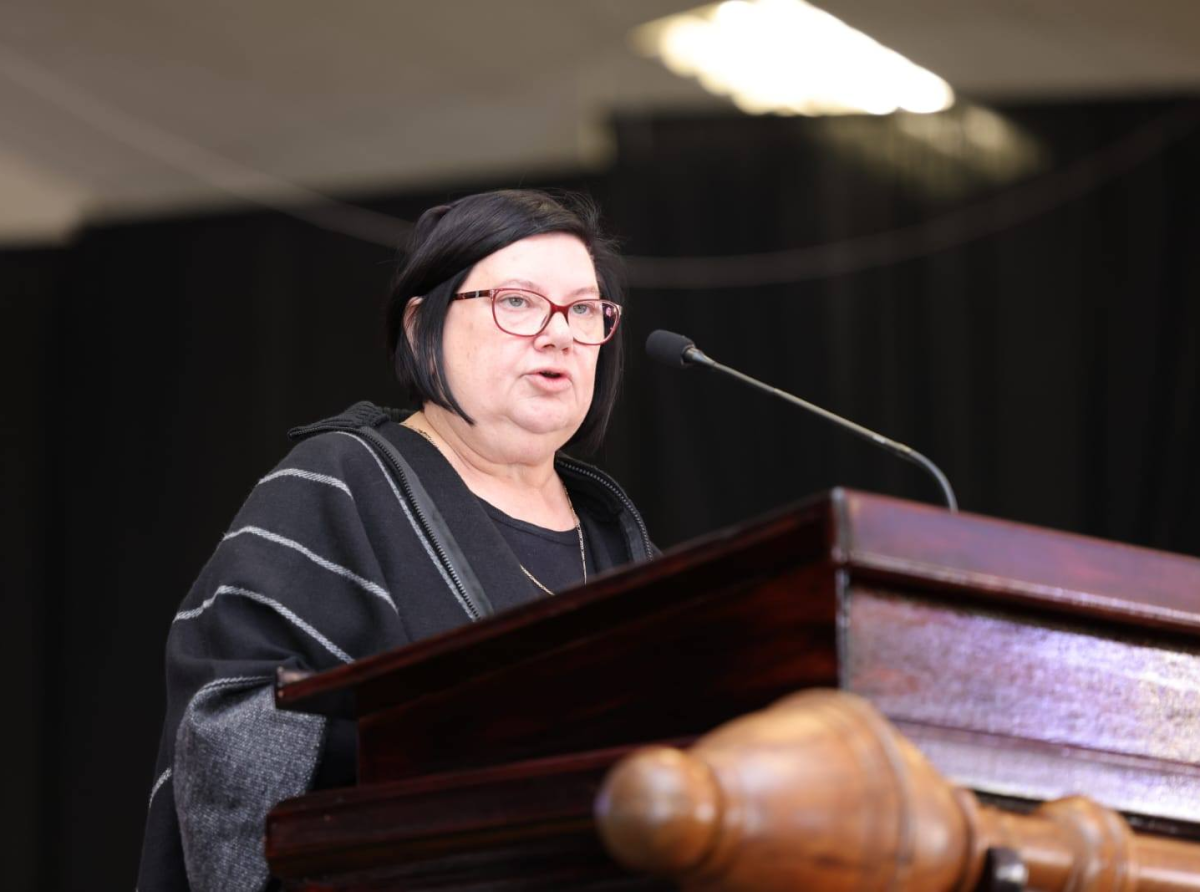
A 7,500-hectare land rehabilitation programme set to create 700 green jobs is at the heart of a bold economic shift unveiled by Free State MEC for Agriculture, Rural Development and Environmental Affairs, Elzabé Rockman.
Tabled as part of the department’s 2026/27 Budget Vote, the plan marks a decisive pivot from treating environmental management as a compliance exercise to positioning it as a catalyst for economic recovery and long-term sustainability.
At its core is a simple but often overlooked reality: without functioning ecosystems, economic growth cannot endure. In a province increasingly strained by land degradation, failing waste systems and water risks, the budget reframes environmental repair as the foundation for rebuilding the economy.
Rockman’s approach is notably pragmatic. Rather than broad commitments, it draws a direct link between restoration, infrastructure investment and job creation. The rehabilitation project aims to restore soil health, curb erosion and boost agricultural productivity in rural areas where unemployment remains high.
The programme forms part of a broader allocation of R1.089 billion for 2026/27, rising to R1.139 billion in 2027/28 and R1.170 billion in 2028/29. Of this, R159.5 million is dedicated to Environmental Affairs, now elevated to a core programme—underscoring its growing economic role.
The timing is significant. With South Africa’s economy under pressure and municipalities struggling to maintain infrastructure, environmental decline has become a direct drag on growth. In the Free State, these pressures are particularly acute.
The budget responds with an infrastructure-led recovery model. Beyond the flagship project, R54.2 million has been allocated through the Infrastructure Enhancement Allocation, while R19 million is earmarked for disaster management, Foot-and-Mouth Disease response and waste management. Conditional grants total R286.3 million, reinforcing land care and agricultural sustainability.
At municipal level, efforts are focused on stabilising basic environmental systems. Plans to audit 34 landfill sites and conduct 280 compliance inspections aim to shore up waste management—an often overlooked but critical pillar of economic stability.
The province is also tackling the long-term impact of environmental disasters. In Jagersfontein, where a tailings dam collapse left soil sodium levels up to 80% above normal, a pilot project using gypsum is underway to restore soil quality—signalling a shift toward science-based recovery.
International support is bolstering these efforts. In partnership with North West, the province has secured about R100 million over five years from the Global Environment Facility to advance land restoration and sustainable development.
Meanwhile, the Foot-and-Mouth Disease outbreak—now with 443 confirmed cases affecting nearly 189,000 animals—continues to strain the agricultural sector. Although R26 million has been allocated, spending has been slow due to vaccine supply constraints. To strengthen biosecurity, mobile quarantine facilities are being developed along the 485km Lesotho border.
The broader message is clear: economic recovery in the Free State will hinge as much on restoring environmental systems as on reviving traditional industries.
However, risks remain. Municipal capacity constraints and procurement delays continue to threaten implementation, and the gap between budget allocations and actual spending raises concerns.
Even so, the strategy signals a meaningful shift. In a province battling deep environmental degradation and high unemployment, Rockman’s plan offers a practical, measurable path forward—one that ties ecological repair directly to economic renewal.