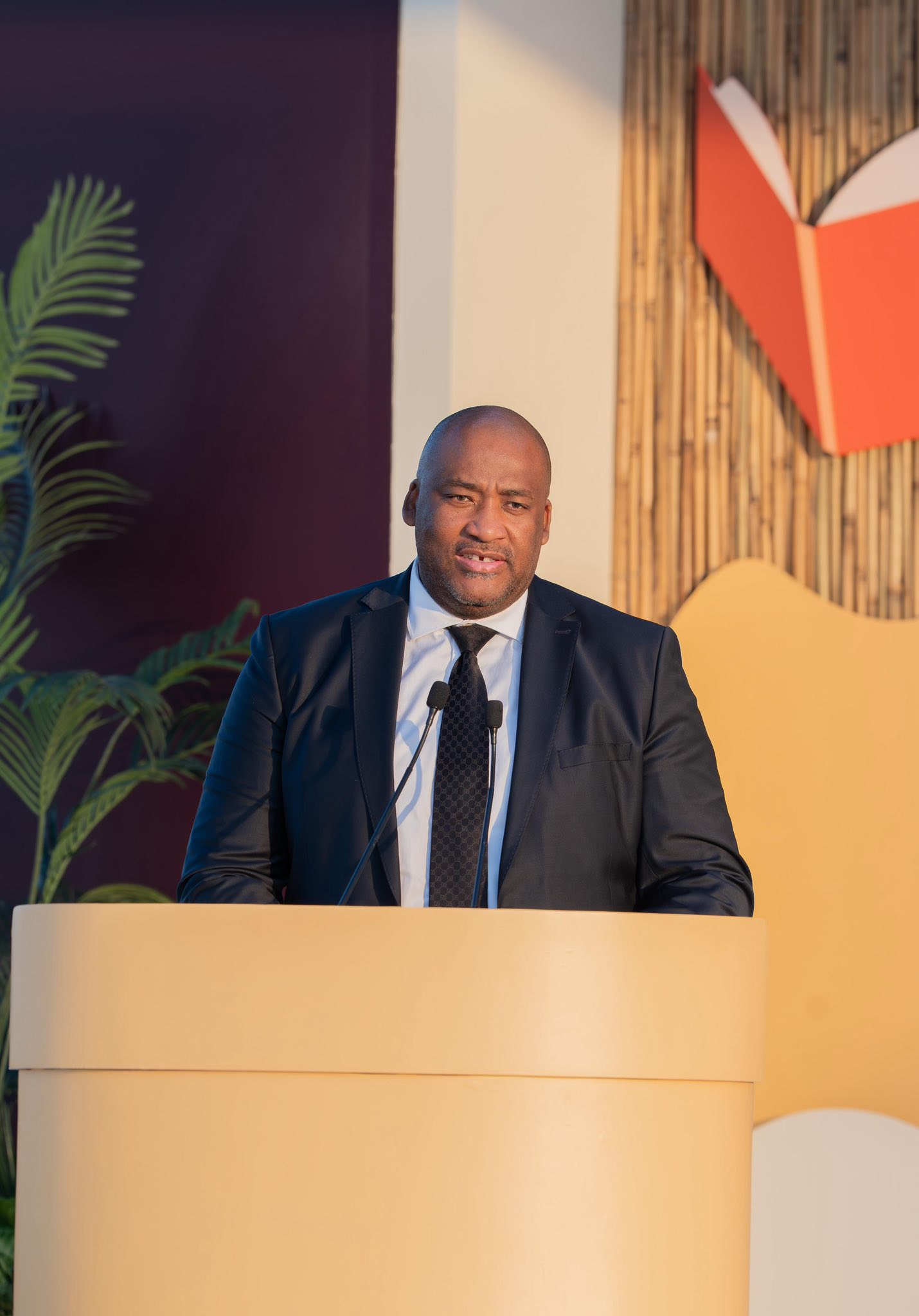
South Africa’s arts and culture sector is facing one of its most turbulent periods in recent years, as a wave of funding cuts under Sports , Arts and Culture Minister Gayton McKenzie leaves some of the country’s most recognisable festivals and organisations scrambling to survive.
At the centre of the storm is the Department of Sport, Arts and Culture’s (DSAC) decision to either withdraw or withhold funding from several long-standing institutions, many of which have, for decades, formed the backbone of the country’s creative economy.
Speaking to IOL, a source on condition of anonymity revealed the harrowing reality that many creatives find themselves in.
The source explained that without the tax rebate system, productions aren't coming to South Africa anymore. Rebates for the film industry in South Africa effectively stopped functioning between March 2023 and March 2024, leading to a severe ongoing crisis as of early 2026.
The Department of Trade, Industry, and Competition (DTIC) has maintained that the incentive was open, but no new applications were approved, and adjudication meetings stopped in March 2024, leaving hundreds of millions of rands in payments unpaid.
“We had Canadian producers that literally said they don't want to come and do work in South Africa because there's no rebates. They also gain from the rebate system and with these productions or anything that happens in South Africa, for every rand that's spent, five rand is generated,” revealed the source.
The Department of Trade, Industry and Competition administers three types of film and television incentives: Foreign Film and TV Production and Post-Production Incentive. SA Film and TV Production and Co-Production and The South African Emerging Black Filmmakers Incentive (SA Emerging Black Film).
“Gayton's actually hurting not just the arts community or the film and entertainment, because when they have the event, they are staying in hotels, they're ordering catering, they are getting transport.
“There are so many other service providers that are involved in the entire value chain and people are just struggling.”
Play Video
In recent months, there have been several productions that have made headlines for not fulfilling their payment obligations to actors and crew members. The source reveals just how dire the situation is.
“A lady who owns an animation studio, she told me she had to get help from her family to bankroll her, essentially, because the money's just not coming in.”
The film industry is then faced with a dilemma of not having distribution channels for its films. Multichoice, now a Canal+ company, has many production contracts not being signed, leaving many people idling.
The public broadcaster is not better with murmurs of corruption mounting at the SABC. “The corruption! It’s a dirty, dirty industry, and so much politics going on.”
Minister McKenzie has defended the department’s funding decisions in a series of public statements, media briefings, and social media posts, arguing that the arts budget needs to be redistributed to ensure broader access and transformation in the sector.
When asked why he decided to defund the iconic festivals, McKenzie shifted things back to festival organisers making them seem as though they are entitled.
"The problem that we are having in this country is the culture of 'we are going to get money no matter what we do'," he said.
He has argued that the shift is aimed at “opening up opportunities” in the creative economy, with a stronger focus on new entrants rather than repeatedly funding the same legacy institutions.
The Democratic Alliance has previously lambasted McKenzie's unjustifiable withdrawal of funding to iconic festivals across the country such as the Cape Town International Jazz Festival, the National Arts Festival, the Suidoosterfees, the KKNK, the Woordfees, Open Book Festival, Innibos, Aardklop and the Vrystaat Kunstefees.
"Cultural festivals are not luxuries, they are vital platforms for preserving our diversity, supporting the creative economy and contributing billions to local and national growth," said MP Leah Potgieter.
While millions are being stripped from cultural festivals, they are being poured into sporting events such LIV Golf, which took place in March and will be returning in 2027.
“The Minister is grandstanding and has turned the department into his own private company or fiefdom. He is abusing public power and public funds at the expense of youth empowerment, job creation, and arts development,” said South African Roadies Association (Sara)'s president, Freddie Nyathela.
However, critics in the arts sector argue that while the intent may be transformation, the execution risks destabilising the ecosystem that sustains the very artists the policy seeks to uplift.
The National Arts Festival, the Cape Town International Jazz Festival, and several other major festivals have all publicly raised concerns about the long-term sustainability of the sector under the new funding approach.
Minister McKenzie has defended the department’s funding decisions in a series of public statements, media briefings, and social media posts, arguing that the arts budget needs to be redistributed to ensure broader access and transformation in the sector.
When asked why he decided to defund the iconic festivals, McKenzie shifted things back to festival organisers making them seem as though they are entitled.
"The problem that we are having in this country is the culture of 'we are going to get money no matter what we do'," he said.
He has argued that the shift is aimed at “opening up opportunities” in the creative economy, with a stronger focus on new entrants rather than repeatedly funding the same legacy institutions.
The Democratic Alliance has previously lambasted McKenzie's unjustifiable withdrawal of funding to iconic festivals across the country such as the Cape Town International Jazz Festival, the National Arts Festival, the Suidoosterfees, the KKNK, the Woordfees, Open Book Festival, Innibos, Aardklop and the Vrystaat Kunstefees.
"Cultural festivals are not luxuries, they are vital platforms for preserving our diversity, supporting the creative economy and contributing billions to local and national growth," said MP Leah Potgieter.
While millions are being stripped from cultural festivals, they are being poured into sporting events such LIV Golf, which took place in March and will be returning in 2027.
“The Minister is grandstanding and has turned the department into his own private company or fiefdom. He is abusing public power and public funds at the expense of youth empowerment, job creation, and arts development,” said South African Roadies Association (Sara)'s president, Freddie Nyathela.
However, critics in the arts sector argue that while the intent may be transformation, the execution risks destabilising the ecosystem that sustains the very artists the policy seeks to uplift.
The National Arts Festival, the Cape Town International Jazz Festival, and several other major festivals have all publicly raised concerns about the long-term sustainability of the sector under the new funding approach.
*This article was first published by IOL News