As the weather continues to deteriorate across the country, the MEC of Cooperative Governance and Traditional Affairs, Saki Mokoena, urges the public to avoid traveling to snow-affected areas for recreational purposes and to limit unnecessary travel until conditions improve.
This follows the South...
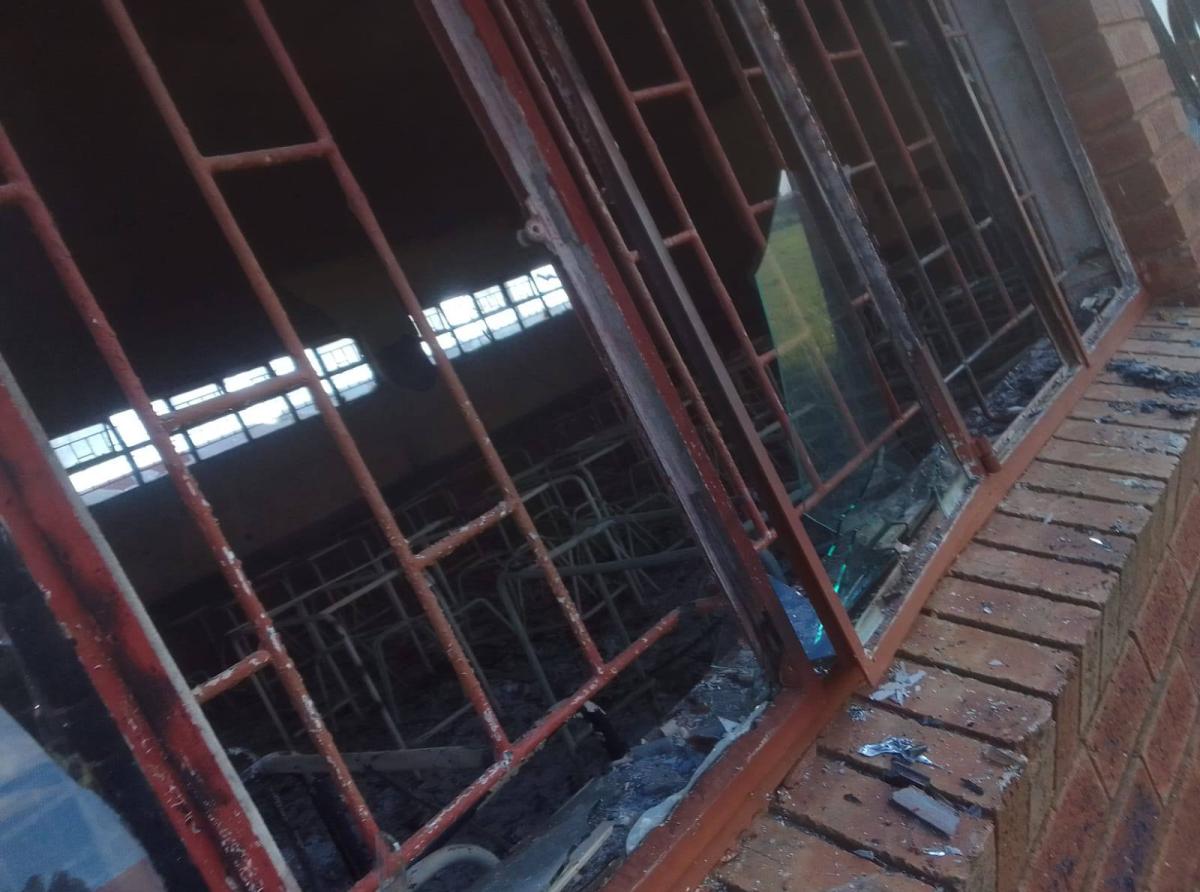
Burnt classroom at FM Ramaboa School. Photo : FacebookBurnt classroom at FM Ramaboa School. Photo : Facebook
By Lerato Mutlanyane
Across South Africa, school fires are leaving classrooms in ashes, education disrupted, and government coffers drained. In North West province alone, a string of fires since 2018 — from Boitseanape Technical High to FM Ramaboa Technical School — has destroyed classrooms, edu cational resources, and infrastructure, even claim ing the lives of three children at the North West School for the Deaf. Schools are meant to be sanctuaries — yet in North West, desks are turning to charcoal and chalkboards to cinders. The Department of Edu cation describes the fires as “barbaric,” and every blaze is a setback to progress in infrastructure and learning outcomes. Research into fire safety management in special needs schools shows a troubling pattern: learners, management, and stakeholders are not sufficiently engaged in fire safety programs. Limited implemen tation of fire safety protocols and poor adherence to legislation have left schools vulnerable, while community vandalism and protests exacerbate the risk. The practical impact is devastating: lessons halt ed, final exams disrupted, and maintenance pro jects delayed, leaving long-term scars on learners’ education. Earlier this week, FM Ramaboa Technical School in the Itsoseng Region was hit by another fire. MEC for Education Viola Motsumi condemned the inci dent in the strongest terms: “On behalf of the Department, I wish to condemn in the strongest terms this barbaric incident, which seeks to destroy learners’ education. I call on the South African Police Service to get to the bottom of this incident and arrest whoever is responsible. Such culprits need to be given the harshest sen tence to show others that destroying educational assets is unacceptable.” The North West Education Department is work ing to restore order and prevent further damage. Spokesperson Vuyo Mantshule noted that while many schools have 24-hour surveillance and func t ional fire-alarm systems, gaps remain, especially in townships and villages where funding is limited. Safety audits are inconsistent, and fire-extinguish ing equipment is not always maintained. “Yes, this is a huge setback in terms of infrastruc ture,” Mantshule said. “Three schools have burned down this financial year alone — two in Bojanala and one in Ngaka Modiri Molema Districts. We are conducting workshops and training to ensure that staff and communities know how to respond and prevent future incidents. We are working hand in hand with SGBs, community forums, and the police to monitor schools day and night.” Experts warn that these fires are not just in frastructure problems — they are a threat to the future of education. Each blaze erases more than buildings; it steals learning resources, disrupts studies, and fractures the sense of safety that schools are meant to provide. For North West learners, the cost of these fires goes far beyond repairs. Each destroyed classroom is a lost lesson, each scorched textbook a stolen op portunity, and each fire a stark reminder that the battle to protect South Africa’s schools is far from over.