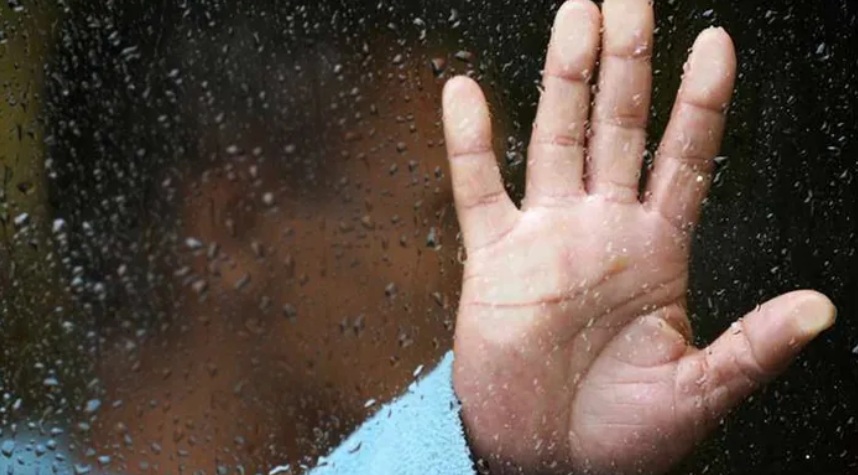
As Child Protection Month launches this week, we are reminded of children like Joshlin Smith who remain missing years after disappearing.
Joshlin Smith was six years old at the time when she disappeared from her Middlepos home in Saldanha on February 19, 2024.
Child Protection Month is a national campaign which aims to promote the rights, safety, and well-being of children in South Africa, and the theme for 2026 is: “Working together in ending violence against children”.
The National Department of Social Development said the initiative is increasingly critical, as children continue to experience abuse, neglect, exploitation and harm across households, schools, communities and digital platforms.
The department kicked off this month with a launch held at the Prince Mangosuthu Sports Field, eDumbe, in KwaZulu-Natal.
According to the National Child Protection Register, first to third quarter statistics for the 2025/26 financial year show 8,984 cases of child abuse and 3,258 cases of sexual abuse recorded.
The Department of Justice’s statistical records show an increase in statutory rape to 199 for the 2025/26 financial year as compared to 127 in the 2024/25 financial year.
Children committing statutory rape is also a concern, noted with 22 reported cases, whilst 890 children committed rape. 129 of the rape cases involved victims under 18 years old.
The Acting Chief Director of Communication of the Department, Sandy Godlwana, said the 2026 Child Protection Month will be focused on strengthening statutory rape case management, as well as identification, reporting, investigating and provision of therapeutic services. It aims to provide a coordinated multi-sectoral framework for the prevention and management of statutory rape cases to ensure the child victim receives immediate protection and ongoing psychosocial support.
This is a modal window.
The media could not be loaded, either because the server or network failed or because the format is not supported.
“A special focus will also be given to strengthening responses to statutory rape, given rising teenage pregnancies and persistent gaps in mandatory reporting and case handling as the country continues to experience high levels of gender‑based violence, child sexual abuse, and increasing rates of teenage pregnancy,” Godlwana said.
While children are among the most vulnerable within society, they continue bearing the brunt of violence from adults.
Earlier this week, a 21-year-old man killed a three-year-old girl because her mother, a domestic worker, did not ‘clean properly’ despite his grandmother being the woman’s employer.
In Limpopo, a two-year-old girl was kidnapped from her home during the early hours of Saturday, May 2.
Omphile Sethole was taken from her home in the Ga-Mabuela Village.
Last week, two newborn babies were dumped on the cold and wet streets of Cape Town.
Spokesperson for anti-gender-based violence organisation Ilitha Labantu, Siyabulela Monakali, said children across the country continue to be subjected to some of the worst forms of abuse.
“In many instances, the perpetrators of such abuse are not strangers, but individuals known and trusted by the child. These include family members, parents, guardians, and acquaintances who are expected to safeguard the well-being and dignity of children. Instead, society continues to witness deeply concerning cases where those entrusted with the care and protection of children misuse that trust and subject children to abuse, neglect, and harm,” he said.
Monakali said this ongoing reality reflects a grave injustice within communities and highlights the urgent need for stronger protective interventions, accountability, and social support systems centred on the safety and well-being of children.
According to recent SAPS quarterly crime statistics for the 2024/2025 reporting period, 315 children were murdered within three months, while 490 cases of attempted murder against children were recorded. During the same period, 1,944 children were victims of assault with intent to cause grievous bodily harm.
Statistics South Africa has further indicated that rape accounts for approximately 38% of all reported crimes committed against children, while common assault and assault with intent to cause grievous bodily harm account for nearly 45% of reported crimes against minors.
“These figures paint a deeply concerning picture of the levels of violence, abuse, and trauma confronting children across homes, schools, and communities in South Africa. The responsibility for safeguarding and supporting the well-being of children has, in many instances, been unfairly shifted onto teachers, educators, and schools, particularly within township and rural communities where social challenges are often most severe,” Monakali said.
Further stating: “In communities heavily affected by gang violence, substance abuse, domestic violence, and crime, these patterns frequently manifest within schools themselves. Learners are often exposed to violence and trauma both within their communities and educational environments, yet many schools, particularly in township and rural communities, remain under-resourced and insufficiently equipped to provide the psychosocial support and trauma-informed interventions required to adequately support vulnerable children.”
Monakali said child protection requires more than awareness campaigns. He said it required coordinated intervention measures, strengthened community-based support systems, improved access to social workers and healthcare services, public education, and policies that prioritise prevention alongside protection.
“As the country observes Child Protection Month, Ilitha Labantu calls for renewed focus on strengthening child protection systems, addressing gaps in support services, and ensuring that vulnerable children and mothers are met with accessible, responsive, and evidence-based interventions,” he added.
From October 1, 2025, to March 31, 2026, the Western Cape Department of Social Development received a total of 1,957 reports of child abuse.
According to the department’s spokesperson, Esther Lewis, the top three categories of abuse reported were:
Lewis told IOL that the Western Cape currently has over 43,000 children in foster care. In addition, 2,800 children have been placed in non-profit organisation (NPO) run child and youth care centres across the province.
Section 28 of the Bill of Rights in the Constitution states that every child has the right ‘to be protected from maltreatment, neglect, abuse or degradation.
When reporting abuse, members of the public will be urged to complete Form 22 as per the requirements of the Children’s Act.
Form 22 is a legal document used for the mandatory reporting of suspected child abuse, sexual abuse, or deliberate neglect. It is completed by professionals (teachers, doctors, police) or community members to initiate an investigation by the Department of Social Development, a designated child protection organisation, or the SAPS.
Safety parents also provide temporary care for no more than six children, unless the children are siblings, for up to 90 days.
According to Lewis, the Western Cape Department of Social Development currently has 233 registered safety parents in the Cape Metro and 226 registered safety parents in the rural regions such as the West Coast, Eden Karoo, and the Cape Winelands/Overberg region.
“The Department is always actively seeking to recruit safety parents to ensure an adequate spread across the province, for when the need arises. Prospective safety parents should be mindful that emergency removals can take place at any time of day, and can involve children of different ages.
“When children are removed from their homes, they can be placed with safety parents for up to three months while the social worker conducts their investigation. Their findings are presented to the Children’s Court, who will then rule on whether the child is in need of care and protection. The court will also rule on whether the child should be placed in foster care,” Lewis said.
Children are placed with foster parents with a court order, for up to two years at a time.
“After two years, the court will rule on whether the order should be extended, or if the circumstances allow for the child to be placed back with their biological parents/ caregivers,” Lewis said.
The Department of Social Development calls on eligible people who have a love for children and are willing to be part of the safety net for vulnerable children to visit their nearest office to find out more.
“While being a safety parent is a temporary measure, you can be part of making a huge impact on a child’s life when they need it most,” Lewis added.
If you are a child or a parent who needs help, or you’d like information on becoming a foster or safety parent, please call the DSD toll-free number 0800 220 250 or visit your nearest DSD local office.
This article was posted by IOL