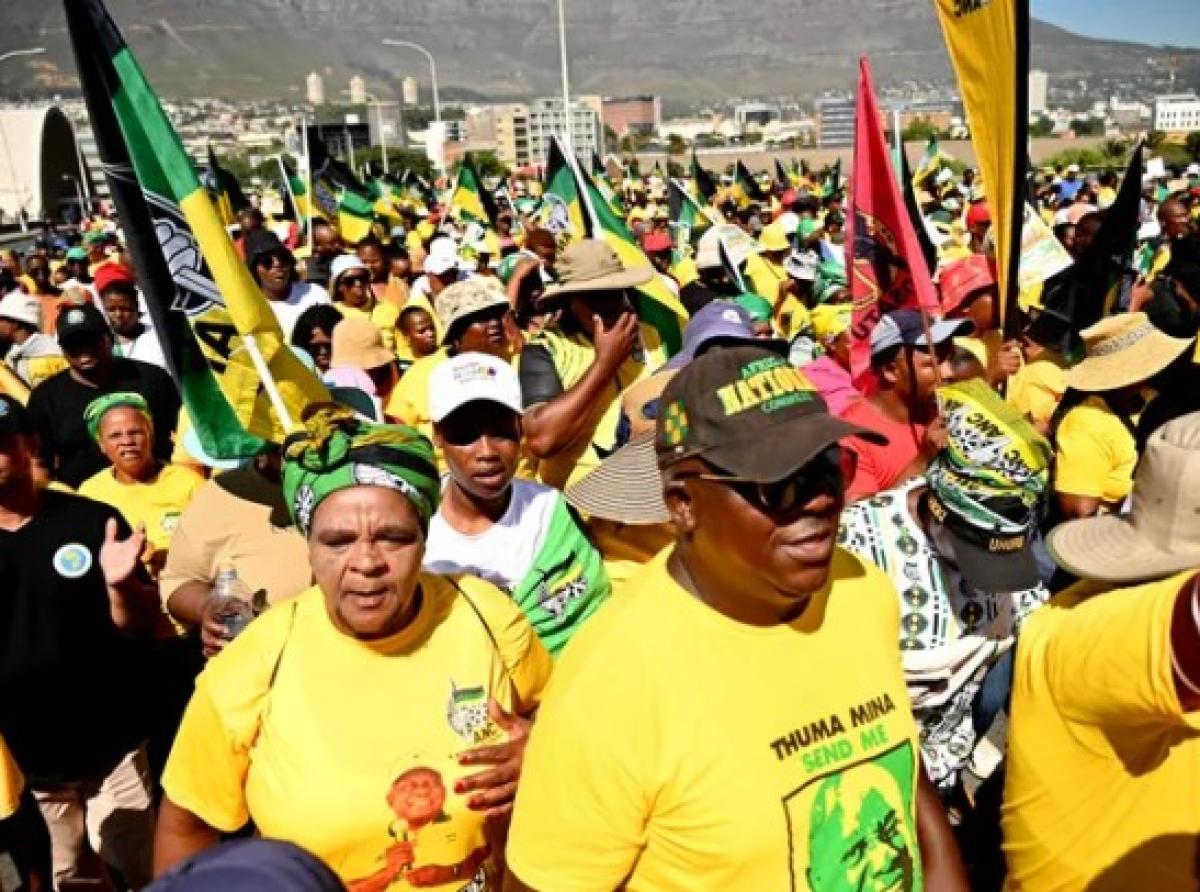
Despite the ANC’s opposition to the South African Communist Party’s (SACP) plans to contest the upcoming local government elections, a segment of the party’s members, especially those who are dissatisfied with the current leadership, supports the decision.
This comes after the ANC National Executive Committee (NEC) reportedly moved to enforce a hardline stance following the alliance partner's decision to contest elections independently, effectively opposing the ANC at the polls.
According to the NEC, if a member votes for or campaigns for the SACP, they are effectively violating the ANC constitution.
The party reportedly invoked sections of the party’s constitution that prevent members from joining or supporting an opposition party (the SACP).
Under the ANC constitution, any member who contests elections against the ANC or supports an opposing party, forfeits their membership.
The party’s senior member, previously linked with the left-wing faction within the ANC, said SACP is an independent organisation and that there is nothing wrong with the alliance contesting the elections.
The member, who opposed the NEC decision during the meeting, said they argue that the ANC is not a “state power”, adding that both the SACP and the ANC should continue engaging and deal with the reconfiguration of the alliance.
Senior members such as Andile Lungisa, Lindiwe Sisulu and Mzwandile Masina reportedly opposed the ANC’s decision, calling for further engagement with the SACP.
In a statement that was issued on Sunday, the ANC said the NEC meeting deliberated on this matter with its mandate from the National General Council (NGC), adding that the party has accordingly reached a considered position, informed by organisational processes and guided by the party’s historic mission.
“Following the Special NEC, the ANC national officials have been formally mandated to engage the leadership of the SACP on the outcome of the NEC deliberations, as well as to consult further with other alliance partners,” read the statement.
ANC and SACP have a historic tripartite alliance (alongside Cosatu) stemming from the 1950s struggle against apartheid, deeply merging their leadership and ideologies. They jointly adopted the Freedom Charter in 1955, and, following a 1928 initiative to transform the ANC into a revolutionary movement, the two organisations have closely cooperated to pursue the National Democratic Revolution (NDR).
The SACP resolved to contest upcoming elections outside the ANC umbrella in December 2024, following the ANC’s loss of a parliamentary majority and its entry into a Government of National Unity (GNU) with right-wing parties.
The insider said as things stand, ANC members will campaign for the party, while the SACP will campaign for their party.
He said those with dual membership will make their choice as to who they campaign for.
Meanwhile, political analyst Professor Sipho Seepe said there is little doubt that the SACP's decision to contest elections outside the ANC umbrella is borne out of ideological frustration with the ANC.
Seepe said the SACP sees itself as an abused partner called upon to campaign jointly with the ANC only to find its programmes and policy intentions placed on the periphery.
“The SACP is on record of being ignored by the ANC when key issues such as the ANC coalition with the DA. Its decision to contest is a way of saying it has had enough of the abuse,” he said, adding that the ANC is fast losing its traditional supporters amongst workers and the split with SACP will deepen the chasm.
Political analyst and governance expert, Sandile Swana, said the SACP has no choice but to stand up and contest the elections.
He said this is because the position of the potential working class in South African politics, especially through the ANC, has been compromised, adding that 64% of citizens live below the poverty line, while 54% are unemployed in some provinces.
“The ability to build a strong working-class has been undermined by the policies of the ANC to increase unemployment, especially after 2008,” said Swana, adding that the politics of the ANC at the moment have no ideological debate because the party lacks intellectuals.
He added that the SACP should develop its own intellectual work and political work and mobilise the working-class.
*This article was first published by IOL News